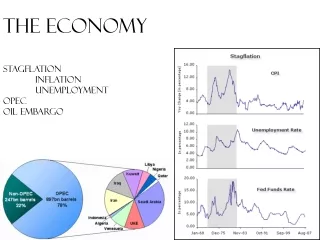
THE ECONOMY
40 likes | 167 Vues
This text explores key economic theories and practices that have shaped nations over time. It delves into mercantilism, emphasizing the importance of building gold reserves and trade. The discussion includes the role of protective tariffs intended to support domestic manufacturers, highlighting the nullification crisis of the early 1830s. Furthermore, it covers capitalism as the system based on private ownership and free enterprise, including innovations like interchangeable parts and mass production that led to reduced prices for consumers.


THE ECONOMY
E N D
Presentation Transcript
THE ECONOMIC THEORY THAT A COUNTRY BECOMES STRONG BY BUILDING UP ITS GOLD SUPPLY AND INCREASING TRADE • MERCANTILISM • A TAX PLACED ON IMPORTS IN ORDER TO AID DOMESTIC MANUFACTURING • PROTECTIVE TARIFF (TARIFFS PASSED IN 1828 AND 1832 LED TO THE) • NULLIFICATION CRISIS
THE ECONOMIC SYSTEM BASED ON PRIVATE OWNERSHIP AND FREE ENTERPRISE • CAPITALISM • ECONOMIC SYSTEM IN WHICH A BUSINESS CAN OPERATE FOR PROFIT WITH MINIMAL GOVERNMENT REGULATION • FREE ENTERPRISE SYSTEM • ELI WHITNEY INTRODUCED THIS METHOD OF PRODUCTION • INTERCHANGEABLE PARTS( THIS LED TO)
MASS PRODUCTION ( THIS LED TO) • CHEAPER PRICES