Essential Welding Techniques and Safety Procedures for Oxy-Acetylene Practices
This comprehensive guide explores essential welding techniques focusing on oxy-acetylene processes. It covers topics such as optimal regulator pressure settings for both oxy (20-35 PSI) and acetylene (4-5 PSI), the importance of tank stability, and safety measures to mitigate risks, including checking for gas leaks. Demonstrations on welding and cutting tips, flame types, and the intricacies of MIG welding setups are included. Priority is given to maintaining proper equipment handling and ensuring safety in high-pressure environments, resulting in a successful welding experience.

Essential Welding Techniques and Safety Procedures for Oxy-Acetylene Practices
E N D
Presentation Transcript
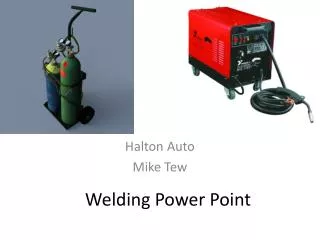
Welding Power Point Halton Auto Mike Tew
Oxygen • Regulator Pressure 20PSI- 35PSI • Tall Green Tanks • Power behind the flame • High Pressure • Tank volume 2500PSI
Acetylene • Regulator Pressure 4-5 PSI • Tanks must stay standing up. If lose of acetone, pressures can become unstable • Red small tank • Lighting fuel • Low pressure • Tank volume 250PSI • 21 PSI is when it Becomes the danger zone
Changing tips • Welding tip • Demo • Cutting tip • Demo • Never tighten tip on with a wrench • Hand tight • No oil, grease or lube • Cutting tip handle (tip nut) must be tightened with wrench • Flash backs at handles not at tanks (will not allow flash back to destroy lines)
Checking for leaks • Order the proper torch solvent to check for leaks • Never use soap and water • Soap contains oils and can make the tanks dangerous • Turn thanks on (handles off) prime lines • Close tank valves (leave lines primed for 20-45 mins) • If regulator pressures drops you have a leak • Spray and check for bubbles
Lighting and shut down • A before O or up you can go • When the torches are shut down like this you reduce the chance of having the high pressure gas rush back on the low pressure gas creating an unstable mixture • Demo
Neutral Flame • 5000 plus degree (neutral flame) • Metal melts at 2500 degree • Kindeling temp 1400 degree (ignition temp)
Cutting • To properly cut the material needs Iron • Cutting is really Oxidizing • Keep tips clean • Dangers • Oxy (high pressure gas) has the possibility to push back up the Acet (low pressure gas) making it become unstable. • Don’t rest tip on material when cutting • Hissing sound is bad (to hot oxidizing flame)
Brazing • A-O • Equal pressures 7 Acet – 7 Oxy (neutral flame) • Light Acet, till smoke crisps • Add Oxy • Flame temp 5000 plus degree • Perg lines every time
Welding Basic Set ups • Weld by sound (bacon and eggs) • Too little Amps gun will pop • Too much volts gun will burn wire in tip • Too find the proper relationship start with AMPS HIGH and bring it down to a proper buzz • Tip 45 Degree 4mm of material • Never perg you mig gas (leave in line, so moisture can not rust inside liner)
Polarity • Flow of current • - to + Straight line (DCSP) • + to – Reverse line (DCRP) • Know what % is in your hand • Mig 70% + to – (DCRP) • Tig the ground (materile) melts (DCSP) • Toungston is in hand (-) 30% • Stick + to - (hand melts) • AC machines are junk