Download
1 / 14
140 likes | 266 Vues
The Bill of Rights, the first ten amendments to the U.S. Constitution, was added in 1791 to guarantee essential freedoms and limit government power. This article explores the difference between rights and freedoms, detailing each amendment’s key protections, from freedom of speech and religion to the right to bear arms and fair trials. It also addresses issues of privacy, state rights, and more, emphasizing the importance of these rights in protecting citizens against government overreach.

E N D
Bill of Rights The Rights of the People
What is the difference between a right and a freedom • Rights are things you have • Rights are things you can do • Government cannot grant rights, they can take away rights • Freedom is the condition of being free • The power to act or speak or think without imposed restraints
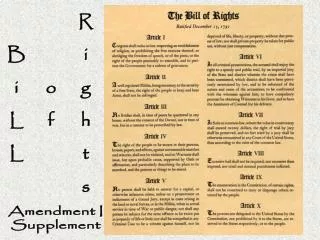
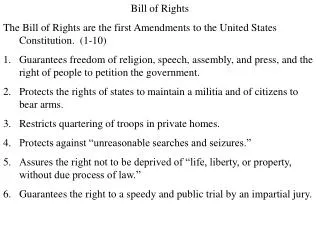
Bill of Rights • First 10 amendments to the Constitution • Added in 1791 • They guaranteed basic freedoms to the people • They also limited the powers of the federal and state governments
Amendment I • Freedom of religion, speech, press, assembly and petition • Government can’t force a religion upon you; practice what you want or none • Say what you want, but there are limits (ex: can’t threaten the president) • Can gather together as long as no disturbance to public safety • Can complain to/about the government
Amendment II • Right to keep and bear arms; states’ right to have militia • Gun control? • Should citizens have weapons or just a “well regulated militia?”
Amendment III • Freedom from having to allow soldiers to stay in citizens’ homes in times of peace • Soldiers cannot stay in civilian houses
Amendment IV • Freedom from unreasonable searches and seizures • Property cannot be searched without a warrant • Warrant is approved by a judge and has to describe what is being searched
Amendment V • Freedom of being accused of a crime except by grand jury indictment and from being tried twice for the same offense; right to due process • Grand Jury to decide if enough evidence for trial • No Double Jeopardy- person can’t be tried twice for same crime • Plead the 5th- person can’t be forced to testify against himself (self-incrimination)
Amendment V continued • Due process of law- certain procedures that those charged with a crime have to go through • Eminent Domain- private property can’t be taken for public use without compensation
Amendment VI • Right to a fair trial in criminal cases • Speedy and public trial • Have to be told what you are being charged with • Confront witnesses and have witnesses testify on your behalf • May have a lawyer • Miranda Rights
Amendment VII • Right to a jury trial in most civil cases • Jury trial in cases dealing with money and property
Amendment VIII • Right to reasonable bail, fines, and punishment • No excessive bail or fines • No cruel or unusual punishment • Death Penalty?
Amendment IX • Protection of rights not written in the Constitution • Any rights not listed in the Bill of Rights are the people’s rights • Right to privacy
Amendment X • Powers not given to federal government reserved for states or people • States rights- any power not given to the federal government are rights for the States to decide unless it goes against the Constitution • Ex: Same-sex marriage, Abortion