Download
1 / 7
70 likes | 199 Vues
Explore the origins of the Tibetan Plateau and its unique geographic features, including an average elevation of 12,000 to 14,000 ft, numerous salt lakes, and a summer climate averaging 58°F. Discover how the harsh environment shaped the traditional economy, primarily based on pastoralism, agriculture, and hunting. Learn about the rich cultural heritage, including origin myths of the children of the monkey and ogress, the significance of yak culture, and the historical role of semi-divine kings. Insights from Dr. Charles Ramble provide a deeper understanding of Tibetan religious practices and early kingdoms.

E N D
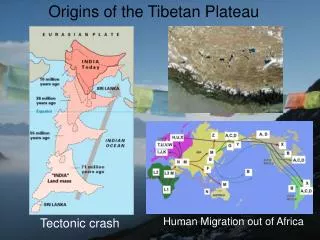
Origins of the Tibetan Plateau Tectonic crash Human Migration out of Africa
Early settlement Size: western Europe without Russia or 2/3 USA. Average elevation: 12-14,000 ft Many Salt lakes Climate: 58 F average in summer Traditional economy based on pastoralism, agriculture, and hunting Origin myth--children of the monkey and ogress who emerged when the inland sea withdrew courtesy Dr. Charles Ramble
How did the environment effect the Tibetans economic practices? courtesy Dr. Charles Ramble
Yak Culture courtesy Dr. Charles Ramble Yak = wealth
Environment & Religious practices (animism) courtesy Dr. Charles Ramble courtesy Dr. Charles Ramble
Early Tibetan Kingdoms • Semi divine kings sat on heavenly thrones and carried on palanquins • Mountains the source of water, king controlled their flow • Six family clans/12 kingdoms/40 principalities Yumbu Lagang castle