Download
1 / 17
170 likes | 344 Vues
This overview explores the rich history of British Columbia leading up to 1896. Initially controlled by the Hudson's Bay Company (HBC) since the 1820s, it witnessed two significant Gold Rushes and the establishment of the first Legislative Assembly. The province joined Canada in 1871, marking a shift in governance and culture, influenced by diverse immigration from the USA, Britain, and Asia. As the last region in North America settled by Europeans, BC is home to over 25 Aboriginal groups, rich landscapes, and a vibrant fur trade history.

E N D
Introduction • From 1820’s – BC is a territory controlled by the HBC • Two fantastic Gold Rushes • Creation of the first Legislative Assembly • 1871 – entry of BC into confederation • To the 1880’s – Vancouver becomes the last stop on the CPR • Immigration from numerous countries world-wide (USA, Britain, Asia) • Came to work, settled permanently and created the diverse culture we have inherited today
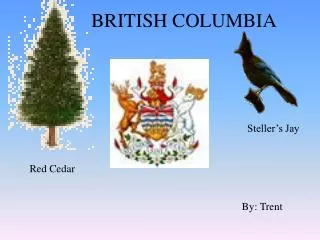
The Pacific Northwest • The last place in North America to be settled by Europeans • Home to more than 25 different Aboriginal groups • Dazzling landscape: rivers, mountains covered with fir, spruce, red cedar standing 60m tall and meters wide • Abundance of fur bearing-animals
Fur Trade • Russians the first to reach the Northwest coast in 1741 • Russians immediately launched a successful trade in Sea Otter fur • Ships from Spain, Britain, and the USA soon followed and trade in seal and sea otter flourished • Intense rivalry between Britain and the USA ensues
Oregon Territory • 1826 – HBC sends George Simpson to govern New Caledonia and Columbia (future British Columbia) • Russia claimed the coast as far South as N. Vancouver Island • The 49thparallel drew a firm boundary between USA and British North America; but the boundary ended at the eastern slope of the Rockies • USA claimed Oregon Territory as far north as 54’40 • British North America claimed as far south as 42’
Oregon Territory Con’t • HBC had no interest in encouraging settlement • It could disrupt a lucrative fur trade and undermine the companies trade monopoly in the area • America’s population was growing rapidly • America pursued an aggressive policy towards the Oregon Territory and encouraged settlement
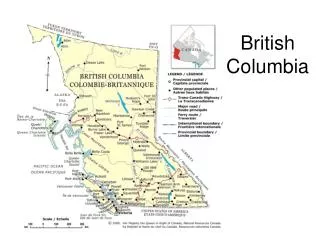
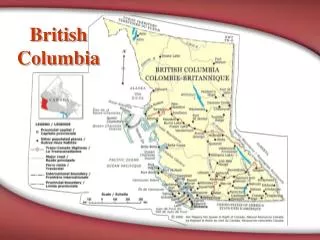
HBC’s George Simpson • Established forts in the Oregon Territory (see map p.209) • Fort Vancouver on the Northern bank of Columbia River. • 1827 Ft Langley on the Fraser River • Open trade in the Fraser Valley and expand trading networks with native peoples • Area was rich in furs and dwindling fur stocks becoming a real problem
John McLoughlin • Appointed chief factor at Ft. Vancouver by Simpson • Political realist, recognized American’s would settle the region South of the Columbia River • To reduce competition with the HBC he encourages them to do so and stay out of region North of the River • Offers them money and supplies to Americans even though he is only supposed to help HBC employees • His plan led to a strong American presence in the Oregon Territory.
Russians • Russians had established a number of fur-trading posts in Alaska and along the northern Northwest Coast • 1839 HBC and Russians agree that the Russians will cease operations south of 54’40’ N • In exchange HBC would supply Russian posts in Alaska with food • HBC steamboat the Beaver (1835) supplied these posts, was a mobile trading post with the Northwest coast peoples and added to British presence in the area