Understanding Ecosystem Succession: Processes of Change in Communities
This resource explores the concept of ecological succession, the gradual process by which ecosystems change and develop over time. It differentiates between primary and secondary succession, detailing how primary succession occurs in uninhabited areas with the establishment of pioneer species, such as lichens and mosses, and how secondary succession follows disturbances like fires or hurricanes, allowing for the reestablishment of ecosystems. The document outlines the steps of succession, highlighting the role of various plant and animal species in regenerating a community.

Understanding Ecosystem Succession: Processes of Change in Communities
E N D
Presentation Transcript
Succession Changes in a community
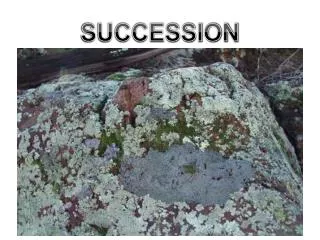
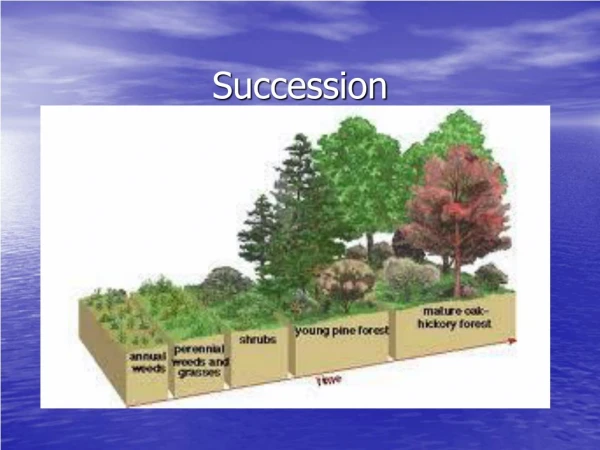
Aim: How does succession occurs in an ecosystem? • Do now: Observe the picture and explain what happened in the ecosystem:
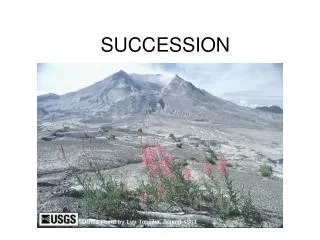
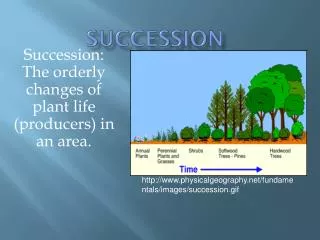
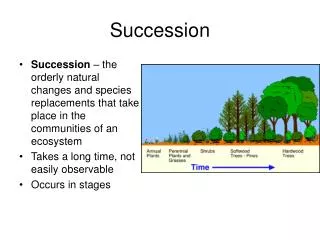
Succession • Succession is the sequence of biotic changes that regenerate a damaged community or create a community in a previously uninhabited area. • Primary succession is the establishment and development of an ecosystem in an area that was previously uninhabited. • The first organisms that live in a previously area are called pioneer species.
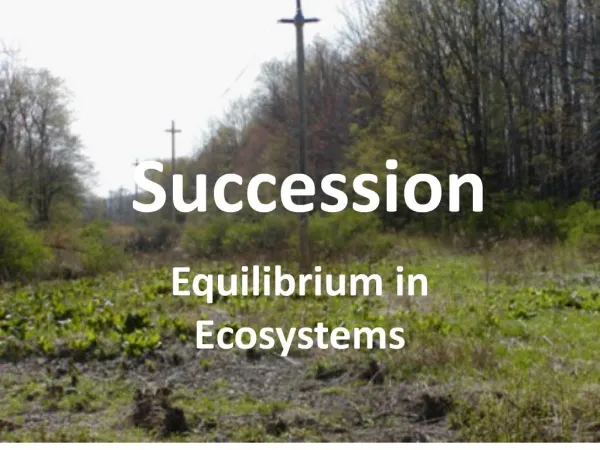
Secondary succession • Secondary succession is the reestablishment of a damaged ecosystem in an area where the soil was left intact. • Plants and other organisms that remain start the process of regrowth. • Secondary succession is cause by a disturbance such as a fire or a hurricane. • There is no end to secondary succesion.
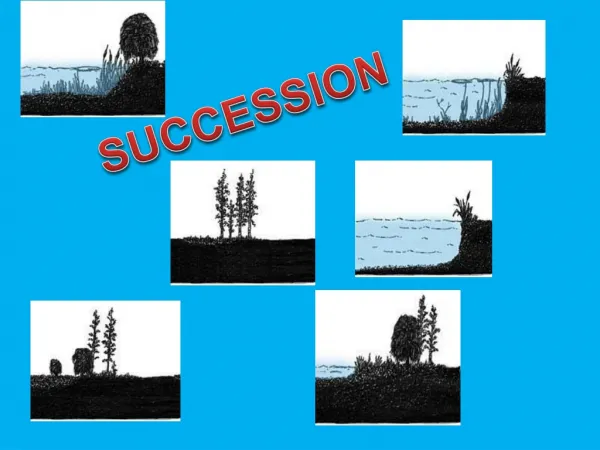
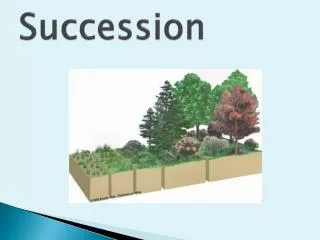
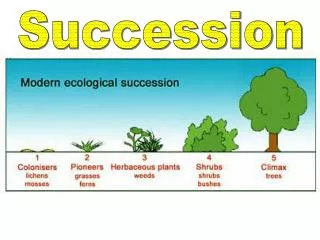
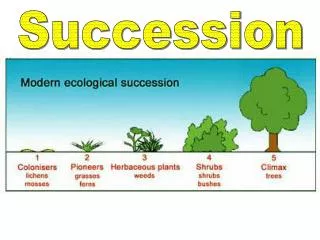
Steps of succesion • 1. Bare rock is exposed by a retreating glacier, or when lava cools. • 2. Lichen and mosses spores are blown in by wind. • 3. Seeds are blown into the area. Small flowers and shrubs grow from the seeds. • 4. Small trees take root and different animals move into the area. • 5. Different trees species grow in the area and rewplace the original trees.