urinary system essay
>>> How to write an essay? Order on the website: HelpWriting.Net

urinary system essay
E N D
Presentation Transcript
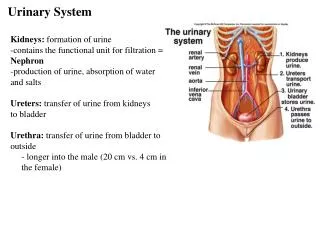
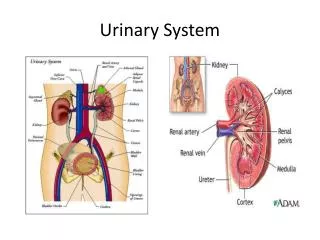
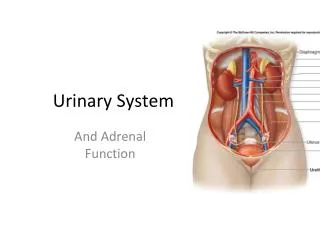
The Urinary System ANATOMY THE URINARY SYTEM The excretory (GUT) system includes the kidney, ureters, urinary bladder, urethra and the male and female genitalia [pic]The Kidney Two bean–shaped organs that lie in the retroperitoneal space on either side of the vertebral column at the level of T12 to L3 Adrenal glands located on top of each kidney surrounded by capsule and fats Right is lower than the left Each kidney is composed of: – Renal parenchyma, Renal sinus and pelvis and Nephrons Kidney: Major Functions вњ“ C–ontrols electrolyte and fluid balance вњ“ R–egulates homeostasis of blood and acid–base balance вњ“ R–egulates RBC production вњ“ E–liminates end products of metabolism, вњ“ S–ecretes...show more content... Reason for seeking care 2. Current illness 3. Previous illness 4. Family History 5. Social History 6. Sexual history в–Є Health History вњ“ Presenting Problem: symptoms may include 1. Pain in flank, groin; dysuria 2. Changes in urination patterns: frequency, nocturia, hesitancy of stream, urgency, dribbling, incontinence, retention 3. Changes in urinary output: polyuria, oliguria, anuria 4. Changes in color/consistency of urine: dilute, concentrated, malodorous; hematuria, pyuria 1) Lifestyle: – Occupation (type of employment, exposure to chemicals such as carbon tetrachloride, ethylene glycol) – Level of activity – Exercise o Nutrition/Diet: water, calcium, dairy product intake 2) Past Medical History – Hypertension, diabetes mellitus, gout, cystitis, kidney infections, connective tissue diseases (SLE), infectious diseases, drug use (prescribed /OTC); previous catheterizations, hospitalizations, or surgery for renal problems 3) Family History – Hypertension, diabetes mellitus, renal disease, gout, connective tissue disorders, Get more content on HelpWriting.net
Urinary System Lab Report The purpose of this study is to compare the difference of urine between one group drink amounts of beverages the other group did not drink anything. In the renal experiment, we test our urinary system by drinking different beverages and record the color, PH value, specific gravity (SG) and output. Before the experiment, the subject should not eat any food to affect the result. The experiment separate to two group – experimental and control group. The experimental group need to drink different type of beverages, the control group did not drink anything. Record the time both start and finish. After drinking 1000ml of beverages, went to toilet for urine every 30 minutes, total for 120 minutes. Observe own urine by PH indicator strips, color and Get more content on HelpWriting.net
Urinary Tract Infections Essay INTRODUCTION In the human body, there are systems that provide different functions and help the body to operate more efficiently. The urinary system is one in particular designed to help the body remain free of excess that we no longer need. "The urinary tract is the drainage system used for removing wastes and extra water. The urinary tract includes two kidneys, two ureters, a bladder, and a urethra. The kidneys are a pair of "bean–shaped" organs, each about the size of a fist. The kidneys are located below the ribs, one on each side of the spine, towards the middle of the back." (NIDDK, 2013) Every several minutes, your kidneys filter around three ounces of blood, also then removing wastes and extra water. That extra water and...show more content... If the infection spreads to your kidneys, symptoms may include, shaking or night sweats, fatigue and a general ill feeling, fever above 101 degrees Fahrenheit, pain in flanks, back, or groin area, flushed appearance in skin, heightened temperature, mental changes or confusion (in the elderly), nausea, vomiting, and severe abdominal pain. ETIOLOGY Most urinary tract infections are primarily caused by bacteria that live in the bowel region of the body. The bacterium Escherichia coli, commonly referred to as "E. coli", causes most UTIs. The urinary tract has several systems to prevent infection. The points where the ureters attach to the bladder act as only one way valves to prevent urine from moving back up toward the kidneys. Urination is intended to wash microbes and any infectious bacteria out of the body. In males, the prostate gland produces secretions that slow down bacterial growth in the urinary tract. In both woman and men, immune defenses try to prevent infections, but despite these safety procedures put in place by the body, infections still do occur in some individuals. COMPLICATIONS Most urinary tract infections are not serious, but some infections if left untreated can lead to serious problems. Some urinary infections can travel to the kidneys. Chronic kidney
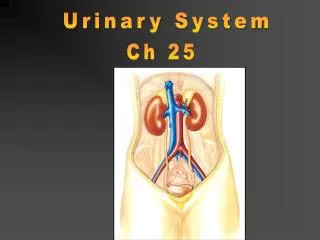
Urinary System The Renal system, also known as the Urinary system, consists of the Kidneys, Ureters, urinary bladder, and urethra. The kidneys are in charge of filtering the blood to remove waste and that is when urine is produced. The urinary tract is made up of the ureters, urinary bladder, and urethra. The urinary tract is supposed to drain the urine from the Kidneys, store it and then releases it during urination. The Urinary system is also supposed to maintain the homeostasis of water, ions, pH, blood pressure and calcium. The Kidneys are in charge of regulating blood pressure, production of erythropoietin (controls red blood cell production in the bone marrow, regulate the acid base balance, and conserve fluids. First the Body takes in the nutrients...show more content... People who are more at risks due to their jobs are bus drivers, auto mechanics, and hairdressers. This is because of the types of chemicals they work with. Another risk is if your family has a history of bladder cancer. Tests and Diagnosis that the doctor can do is he will have you take a urine test and this is to see if there is blood in the urine which is also called hematuria. Gross hematuria is when the patient can see the blood because there is a significant amount. Sometimes the patient may even see the blood but sometimes the blood cannot be seen by the human eye so the doctors have to do a urine test to detect if there is any blood. Some other tests include a cystoscopy which is when they take a long tube with a top and they use it to see in the inside of the urethra and the bladder. You can also use a MRI, CT scan, and X –rays to see if it the cancer has spread to any other organs. Bladder cancer is easy to see because it has a stem and looks like cauliflower, also if the cancer cells are flat it tells us that he cancer is aggressive and can Get more content on HelpWriting.net
Essay about The Urinary System The Urinary System is a group of organs in the body concerned with filtering out excess fluid and other substances from the bloodstream. The substances are filtered out from the body in the form of urine. Urine is a liquid produced by the kidneys, collected in the bladder and excreted through the urethra. Urine is used to extract excess minerals or vitamins as well as blood corpuscles from the body. The Urinary organs include the kidneys, ureters, bladder, and urethra. The Urinary system works with the other systems of the body to help maintain homeostasis. The kidneys are the main organs of homeostasis because they maintain the acid base balance and the water salt balance of the blood. One of the major functions of the...show more content... The Internal urethral sphincter is involuntary. The ureters enter the bladder diagonally from its dorsolateral floor in an area called the trigone. The trigone is a triangular shaped area on the postero–inferior wall of the bladder. The urethra exits at the lowest point of the triangle of the trigone. The urine in the bladder also helps regulate body temperature. If the bladder becomes completely void of fluid, it causes the patient to chill. The urethra is a muscular tube that connects the bladder with the outside of the body. The function of the urethra is to remove urine from the body. It measures about 1.5 inches (3.8 cm) in a woman but up to 8 inches (20 cm) in a man. In the human female, the urethra is about 1–2 inches long and opens in the vulva between the clitoris and the vaginal opening. In the human male, the urethra is about 8 inches long and opens at the end of the head of the penis. Men have a longer urethra than women. This means that women tend to be more susceptible to infections of the bladder (cystitis) and the urinary tract. The functional unit of the kidney is the nephron. It contains a glomerular (Bowman's) capsule, a cup–shaped structure that surrounds a glomerulus (group of capillaries). Together, the glomerular capsule and glomerulus form a unit called the renal corpuscle. Attached to the Bowman's capsule is a long, twisting renal tubule that has four parts: the proximal convoluted tubule, the loop of Henle, the