SlideServe
Menu
Préférences
© SlideServe · v2026

Three-dimensional shapes

seda avatar
100 diapositives · 1.4K Views · Sep 05, 2014

Three-dimensional shapes. Hyperboloid of one sheet. In the real world. Paraboloid. In the real world. What 3D shape is this?. Ruled surface around a prolate cycloid. Description. Ruled surface constructed around a prolate cycloid , plane curve parameterized by:
Three-dimensional shapes - slide 1
01 / 100Three-dimensional shapes
1 / 17

Télécharger la présentation

Three-dimensional shapes
Une image / un lien ci-dessous est fourni (tel quel) pour télécharger la présentation

Politique de téléchargement : le contenu du site vous est fourni TEL QUEL pour votre information et votre usage personnel ; il ne peut être vendu, concédé sous licence ni partagé sur d’autres sites sans l’accord de son auteur.Le contenu vous est fourni TEL QUEL, pour votre information et votre usage personnel uniquement. Téléchargez la présentation en cliquant sur ce lien. Lors du téléchargement, si vous ne parvenez pas à télécharger une présentation, l’éditeur a peut-être supprimé le fichier de son serveur.Pendant le téléchargement, si vous ne parvenez pas à obtenir une présentation, le fichier a peut-être été supprimé par l’éditeur.

F I N

Plus de contenu associé

Transcription de la présentation
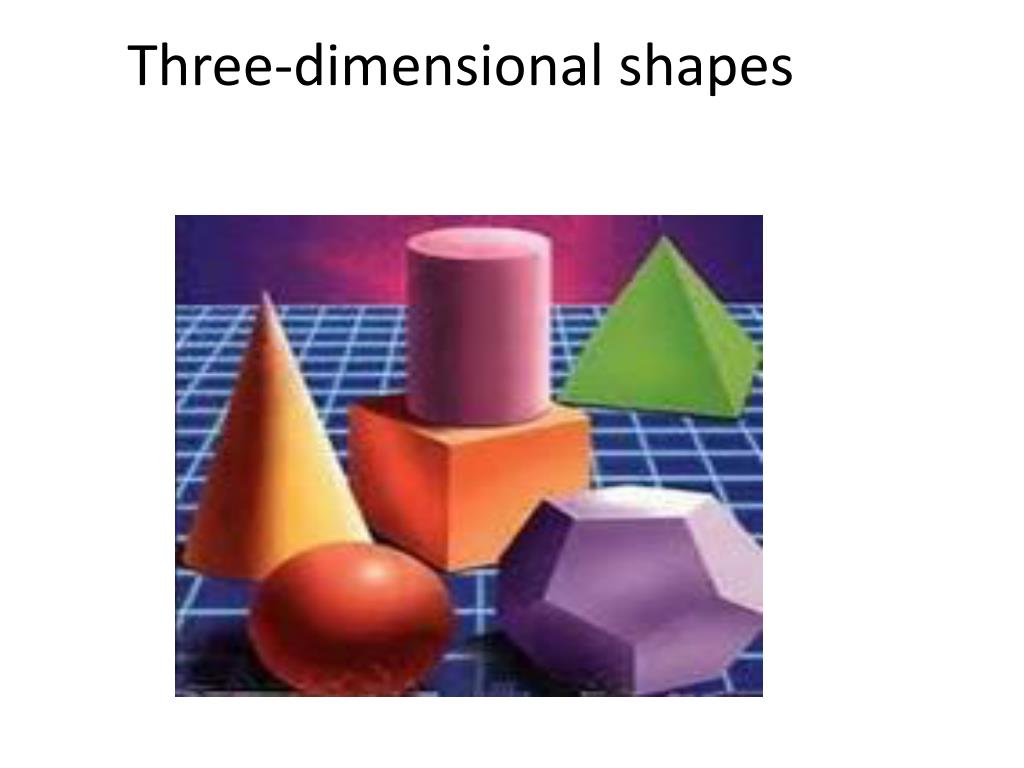
  1. Three-dimensional shapes

  2. Hyperboloid of one sheet

  3. In the real world...

  4. Paraboloid

  5. In the real world...

  6. What 3D shape is this?

  7. Ruledsurfacearound a prolatecycloid

  8. Description Ruled surface constructed around a prolate cycloid, plane curve parameterized by: f[a,b](u) = (a u - b Sin[u],a - b Cos[u])   This curve is the geometric plot of the points on the plane which describe a circumference of radius b when a circumference cocentric of radius a turns without slipping along a fixed straight line, where a<b

  9. What 3D shape is this??

  10. Ruled surface around an epicycloid

  11. Description Ruled surface constructed around an epicicloide, plane curve parametrized by: f(u) = ((a+b)Cos[u] - bCos[((a+b)/b)u], (a+b)Sin[u] - bSin[((a+b)/b)u])   Parameterized curve which describes a point P with a circumference of radius b which revolves around another circumference with radius a.

  12. What 3D shape is this?

  13. Ruled surface constructed around a cardioid

  14. Description Ruled surface constructed around a cardioid, plane curve parameterized by: f[a](u) = (2 a Cos[u](1+Cos[u]), 2 a Sin[u](1+Cos[u])) The implicit equation of the cardioid is: and its polar equation

  15. What 3D shape is this?

  16. Ruledsurfaceconstructedaround a ‘bowtie curve’

  17. Description Ruled surface constructed around a “bowtie", a plane curve parameterized by: f[a,b](u) = (a(1+Cos[u]2)Sin[u], (b+Sin[u]2)Cos[u])

  18. What 3D shape is this?

  19. Solid Pacman

  20. Description ‘Fun’ constructed around a pacman curve, a plane curve whose form is reminiscent of the popular video game ‘pacman’. This ‘solid’ form has been created by means of the following parameterization :      f[n](q,a) = (Cos[q](Cos[q]n + a),Sin[q](Cos[q]n + a),pm(1 - a)/2) where pm takes the values 1 y -1, y a varies between 0 and 1.

  21. What 3D shape is this?

  22. Ruledsurfaceconstructedaroundan 8-petal flower

  23. Description Ruled surface constructed around a flower of 8 petals, plane curve parameterized by: f[n,a](u) = (a Cos[n u]Cos[u],a Cos[n u]Sin[u]) We create a flower of n petals if n is odd, and of 2n petals if n is even. The polar equation of the flower is: r = a Cos[n q]

  24. What 3D shape is this?

  25. Ruledsurfaceconstructedaround a ‘spring curve’

  26. Description Ruled surface constructed around a ‘spring’ curve, a plane curve parameterized by: f[a,b,c](u) = (aCos[u], aCos[c]*Sin[u] + buSin[c])

  27. What 3D shape is this?

  28. Ruled surface constructed around an ‘8-curve’

  29. Description Ruled surface constructed around an ‘8-curve’, a plan curve parameterized by:f(u) = (Sin[u],Sin[u]Cos[u]) Ruled surface constructed around an ‘8-curve’, a plane curve given in implicit form by the equation: : y2 - c2 a2 x4 + c2 x6 =0

  30. What 3D shape is this?

  31. Figure of thelemniscate of Bernoulli

  32. Description A ruled surface formed around a lemniscate of Bernoulli, a plane curve with the parametric representation of: f[a](u) = (a Cos[u]/(1+Sin[u]2),a Sin[u]Cos[u]/(1+Sin[u]2)) The implicit equation of the Bernoulli lemniscate is: (x2+y2)2 = a2(x2-y2)

  33. What 3D shape is this?

  34. Figure of a “folium de Descartes”

  35. Description A ruled surface formed around a “Folium of Descartes", a plane curve parametrically represented by: f(u) = (3u/(1 + u3), 3u2/(1 + u3)) The implicit equation of the Folium of Descartes is: x3 + y3 - 3 x y = 0

  36. What 3D shape is this?

  37. Figure of a “folium de Kepler”

  38. Description A ruled surface formed around a “Folium de Kepler", a plane curve with an implicit equation of:     ((x - b) 2 + y2)(x(x-b) + y2) - 4a(x - b)y2 = 0

  39. What 3D shape is this?

  40. Figure of a “butterfly” curve

  41. Description A ruled surface formed around a “butterfly” curve, one of the various curves found in the catastrophe theory, with a parametric equation of: f[a,c](u) = (c(8 a t3 + 24 t5),c(-6 a t2 - 15 t4))

  42. What 3D shape is this?

  43. Figure of an 8-tooth cog

  44. Description A ruled surface formed around an “8-tooth cog”, a plane curve that is well known in the catastrophe theory, expressed with the implicit form of: x4 - 6 x2y2 + y4 = a

  45. What 3D shape is this?

  46. Figure of a “pyriform” plane curve

  47. Description A ruled surface formed around a pyriform curve, a plane curve parametrically represented by: f[a,b](u) = (a(1+Sin[u]), bCos[u](1+Sin[u]) ) The implicit equation of the pyriform curve is: a4y2 - b2x3 (2 a - x) = 0

  48. What 3D shape is this?

  49. Figure of a “lituus” plane

  50. Description A ruled surface formed around a “lituus”, a plane curve parametrically represented by: f[a](u) = (a u/(u^2)(3/4)Cos[Sqrt[u2]], a u/(u^2)(3/4)Sin[Sqrt[u2]]) Polar equation: r = a q (1/2) This curve is the geometric plot of points P where the square of the distance between P and the origin is inversely proportional to the angle that P forms with the horizontal axis.