Exploring Early Human Interactions with the Environment Across Cultures
This text highlights how early humans and ancient civilizations, including Early Man, Early Farmers, Mesopotamians, Egyptians, Ancient Chinese, and Ancient Greeks, interacted with their environments. From hunting and gathering to developing irrigation and agriculture, these cultures adapted to their surroundings using tools made of stone, metals, and clay. Innovations included mummification in Egypt, terracotta warriors in China, and trade via sea routes in Greece. Each civilization's unique practices reflect their resourcefulness and connection to nature, shaping human history.

Exploring Early Human Interactions with the Environment Across Cultures
E N D
Presentation Transcript
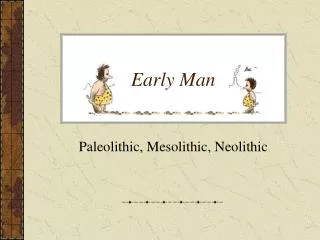
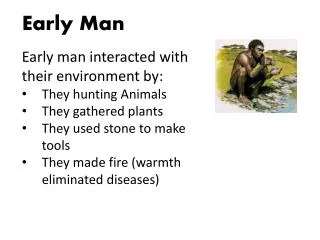
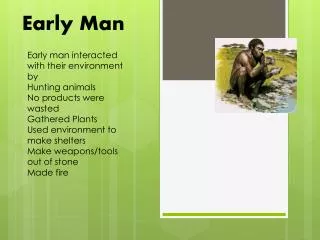
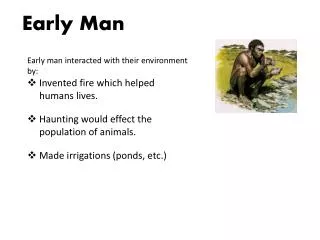
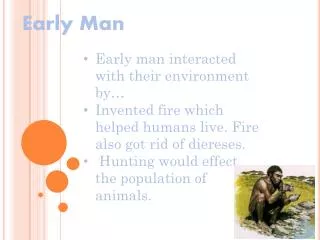
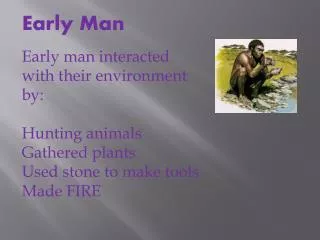
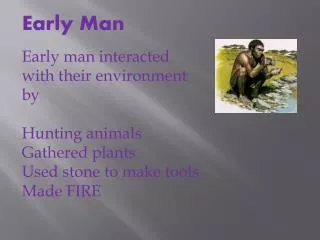
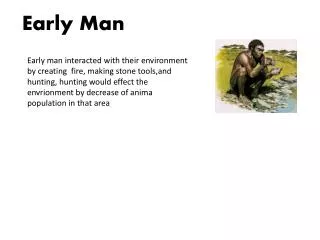
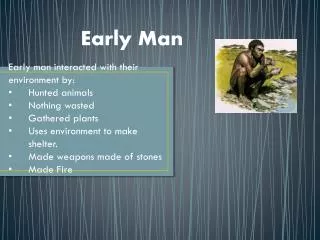
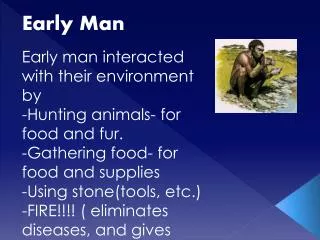
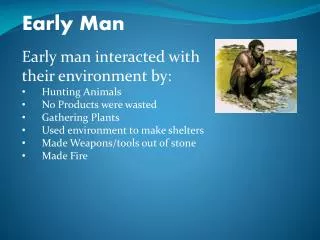
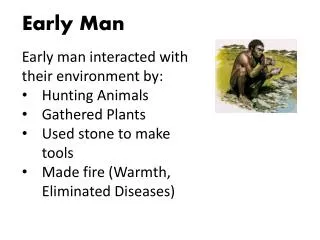
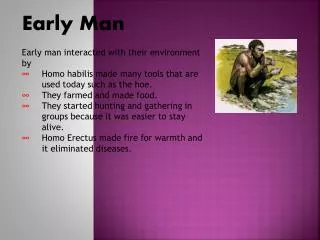
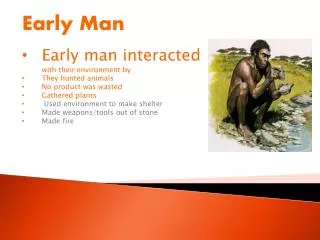
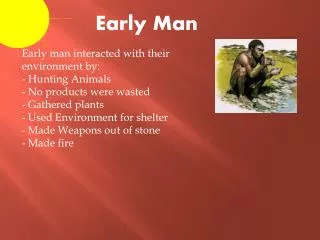
Early Man Early man interacted with their environment by: - Hunting Animals - No products were wasted - Gathered plants - Used Environment for shelter - Made Weapons out of stone - Made fire
Early Farmers Early farmers interacted with their environment by: - Growing crops by plowing soil - Domesticated Animals for products - Irrigation ditches, ponds, and canals were used to water crops - Obsidian was used for tools, weapons and art
Mesopotamians Mesopotamians interacted with their environment by: - Used Clay to make clay tablets and pottery - Built mud brick houses - Used Minerals such as copper and bronze to make tools/weapons - Built larger buildings like ziggurats
Egyptians • Egyptians interacted with their environment by • - Used Linin for Mummies • - Developed Mummification process where they wrapped them up and put them in the stone pyramids • Used Matron (salt) to dry mummies out • Made pyramids out of stone
Ancient Chinese • The Ancient Chinese interacted with their environment by: • - They made the terracotta warriors out of stone and paint • Used loess to make fertile soil • Made silk from silk worms • Made Iron tools/weapons • Great wall of China
Ancient Greece • The Ancient Greeks interacted with their environment by: • Made Acropolis’ out of Stone • Had Open air Agoras • Learned how to use sea for trade and resources • In the mountains the soil was dry and the ancient Greeks adapted by planting olives, grapes, and barley