Understanding Mass Media's Influence on Public Opinion and Political Perspectives
This chapter explores the intricate relationship between mass media and public opinion. It discusses the distinction between private and public opinions, highlighting how attitudes on various issues are shaped by familial interactions, education, and influential figures in society. The role of mass media, including television, newspapers, and social media, in conveying political information and shaping public attitudes is examined. Furthermore, it delves into methodologies for measuring public opinion, such as polling, and the limits of these measures on understanding the intensity and stability of public sentiment.

Understanding Mass Media's Influence on Public Opinion and Political Perspectives
E N D
Presentation Transcript
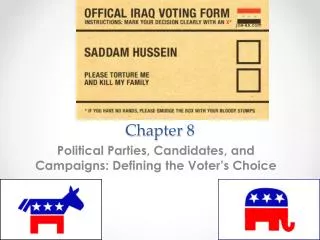
Chapter 8 Mass Media and Public Opinion
Opinions • Private Opinion • Own View • Intensity Differs • Public Opinion • Most or all of Americans • Attitudes held by a significant number of people • EX: protest demonstrations, film, billboard, voting
Different Publics • Many • Hold same view on issue • Public Affairs • Politics • Public issues • Public policies
Family and Education • Family • 1st encounter with political world • Parent comments/stories • Watching television with family • School • Learn about historic figures • Teaches values • Ex: recite Pledge of Allegiance
Other Factors • Single issue • Mass media • Newspapers, magazines, radio, internet, TV • Peer groups • Friends, classmates, neighbors, co-workers • Opinion leaders • Hold public office, writers, broadcasters, doctors • Historic events • Great Depression, assassinations, war
Measuring Public Opinion • Elections • Interest Groups • Media • Personal Contacts
Elections • Votes cast for different candidates • Mandate • Not very accurate measure of public opinion • Voter choices
Interest Groups • Private organizations • Share certain views and objectives • “Pressure Groups” and “Special Interest Groups” • Lobbyist • Letters, phone calls
Media • T.V., newspapers, magazines, blogs • Not very accurate measure of public opinion
Personal Contacts • Try to read the public’s mind • Bags of mail • Phone calls • Emails • Trips home • Encounter public in offices, meetings, social gatherings, baseball games
Polls-The Best Measure • Straw Votes • Ask same question • Given to large number of people • Fairly common • Very unreliable • Literary Digest
Polls Cont… • Scientific Polling • National and regional polling organizations • Get public preference on various issues • Americans Just As Proud to be an American Citizen Now as After 9/11 • Two-thirds say living in freedom and owning a home are parts of the American Dream
The Polling Process • Defining the Universe • Constructing a Sample • Prepare valid questions • Select and control how poll will be taken • Analyze and report findings
Universe • Whole population-aims to measure • Opinions the polls wants to discover • EX: all voters in Ohio, Madison High School students
Constructing a Sample • Not possible to poll everyone • Representative slice • Random sample • Randomly selected people • Need sufficient size • Majority polls 1,500 people Sufficient size+Random=accurate results • Quota sample • Less reliable
Preparing Valid Questions • Question wording • Phrase questions carefully • No difficult terms • No emotionally charged words • Did you vote in the 2004 and 2006 election?
Interviewing and Analyzing • Interviewing • Tone of voice • Carefully worded • EX: door to door, Random digit dialing • Analyzing • Computers • Technology • Publish findings
Evaluating Polls • Fairly reliable • Difficulty measuring • Intensity • Stability • Relevance • Scientific Polls • Most useful tool at measuring public opinion
Limits on the Impact of Public Opinion • Polls are not elections • Opinions vs. concrete information • Democracy
Role of Mass Media • Means of communication • Television • Newspapers • Radio • Magazines
Television • Politics and television • More televisions than plumbing • Replaced newspapers • CBS, ABC, NBC • FOX • CNN, Turner Broadcasting • PBS
Newspapers • 1740 • 1st Amendment- Freedom of Press • 10,000+ newspapers in U.S. • Local papers
Radio • 1920 • Music, news, sports, programs • 20 hours each week • most are local • Devote few minutes to the news
Magazines • 1741 • 12,000 published in U.S. • Golf Digest, Teen, American Rifleman, Consumer Reports
Media and Politics • Public Agenda • Public issues that are focused on • Media power • Electoral Politics • Candidates less dependent on party organizations • Appeal to the people • Stories • Less than a minute • Show people doing something
Limits on Media Influence • 15% that vote are well informed • Selective • Few public affair programs in prime time • Interest