Enhancing Education: The Role of Formative Assessment and Self-Study Processes
This presentation by Dr. David Clune focuses on the transformative impact of formative assessment and self-study processes in educational settings. Highlighting their roles in improving teaching and learning, it emphasizes the importance of valid, reliable, and efficient assessment methods. The objective is to create a robust framework that enhances school improvement and accreditation processes. Engaging stakeholders in an open discussion, Dr. Clune outlines strategies for utilizing assessment data effectively and expanding the “sweet spot” of educational success.

Enhancing Education: The Role of Formative Assessment and Self-Study Processes
E N D
Presentation Transcript
Formative Assessment Process and The Self-Study Process Making a Difference David Clune, Ph.D. President, ERB (212) 672-9806 dclune@erblearn.org
Objective of Accreditation and Self-Study Process Improvement
Process of Accreditation & Self-Study “Sweet Spot”
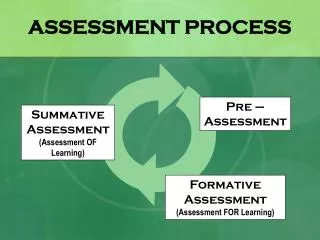
Formative Assessment & Self-Study Processes Formative Assessment Process Self-Study Process
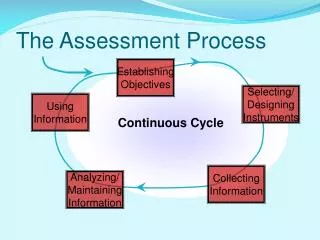
Assessment Difference: Improve Teaching & Learning & Improve Schools • Valid • Reliable • Cost Effective • Efficient • Robust and Timely
Assessment Difference Summative Assessments 0 0 0 0 9 9 9 9 18 18 18 18 27 27 27 27 36 36 36 36 (weeks) (weeks) (weeks) (weeks) Interim Benchmark Assessments End-of-Unit Assessments Ongoing Assessment for Learning
Self-Study & School Improvement: Ongoing Processes • Valid • Efficient • Reliable • Cost Effective • Robust and Timely Impacts School Improvement
Expand the “Sweet Spot” “Sweet Spot”
Open Discussion • Ideas • Next Steps Thank You! David Clune, Ph.D. President, ERB (212) 672-9806 dclune@erblearn.org