Download
1 / 6
60 likes | 230 Vues
This guide explores glaciers, large bodies of ice formed from accumulated snow in cold regions. Glacial ice comprises interlocking crystals that undergo transformation, influenced by temperature and moisture levels. As glaciers move due to pressure and slope, they shape the landscape, often creating U-shaped valleys upon melting. Additionally, we highlight the notable Franz Josef Glacier in New Zealand and discuss the unique flora found in glacier environments, such as bear grass. Join us in understanding these magnificent natural formations!

E N D
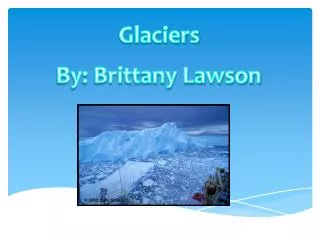
Glaciers By: Brittany Lawson
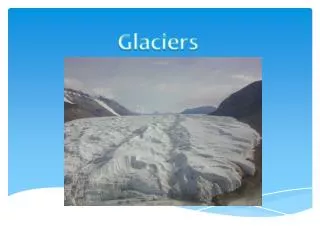
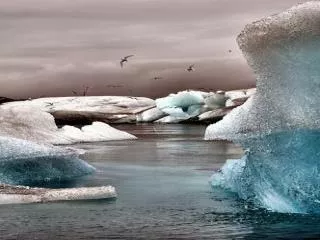
Information and Characteristics Information- a glacier is a large persistent body of ice that forms where the accumulation of snow exceeds. Characteristics-Glacier ice is an aggregate of irregularly shaped, interlocking single crystals that range in size from a few millimeters to several tens of centimeters Many processes are involved in the transformation of snowpack's to glacier ice, and they proceed at a rate that depends on wetness and temperature. When glaciers melt, a U shaped landform appears.
How Are They Formed? . As the snow and ice thicken, glaciers reach a point where they begin to move, due to a combination of the surface slope and the pressure of the overlying snow and ice. On steeper slopes this can occur with as little as 15 m (50 ft.) of snow-ice. The snow which forms temperate glaciers is subject to repeated freezing and thawing, which changes it into a form of granular ice called firn.
Famous Glacier (s) Franz Josef Glacier In New Zealand
Plants Found Along Glaciers Bear grass Flora
Thank You! Merci (Thank You) for watching my slide show