Misleading Media Portrayals of Courts: Unpacking the Reality Behind Trials and Justice
Many people perceive courts primarily through the lens of media, which often misrepresents their functions. Contrary to popular belief, trials are not the everyday activity within courts; they are sensationalized events that attract media attention, particularly when involving violent crimes. This skewed focus results in a distorted understanding of the legal system, leading audiences to view courts as overly lenient on criminals. Such portrayals ignore the judiciary's broader and less glamorous roles, leaving the public with a flawed image of justice.

Misleading Media Portrayals of Courts: Unpacking the Reality Behind Trials and Justice
E N D
Presentation Transcript
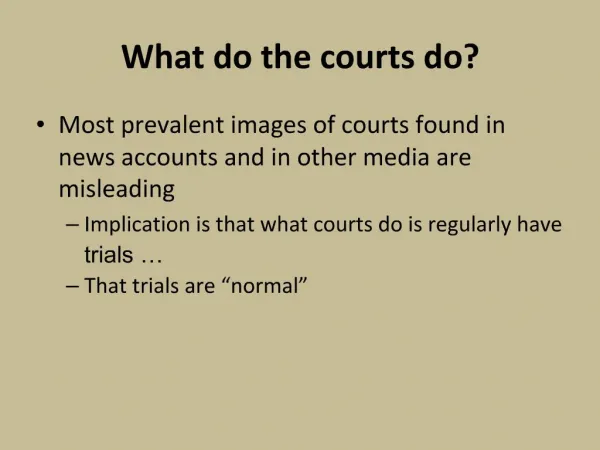
1. What do the courts do? Most prevalent images of courts found in news accounts and in other media are misleading
Implication is that what courts do is regularly have trials …
That trials are “normal”
2. Why trials? Coverage of courtroom activity is driven in part by financial considerations about what the audience wants to see and what will produce market returns
Only some court functions sell. Trials, which often center on violent crime and feature conflict, are appealing to the media.
3. Media images of courts “For many in today’s world, mass media images are their primary source of knowledge about law, lawyers, and the legal system … Directly and indirectly, the media paint a distorted image of the courts. When portrayed indirectly as in the law enforcement focused media, the courts are often alluded to as soft on crime, easy on criminals, due process-laden institutions that repeatedly release the obviously guilty and dangerous. … When shown directly, court officers are often more engaged in fighting crime than in practicing law.”
-- Ray Surette (2007)