Download
1 / 6
60 likes | 163 Vues
This resource delves into the concept of the unit of analysis within research methodologies, defining it as the focal point of data collection, whether individuals, groups, or geographical units. It further distinguishes the unit of analysis from the unit of observation, highlighting their differences. In addition, the document explains the various types of map scales, categorizing them into large, medium, and small scales, each with unique characteristics and applications. A thorough understanding of these concepts is essential for effective research design and data interpretation.

E N D
Units of Analysis, Maps, and Scale Dr. Roy Cole SS300 Research Methods
The unit of analysis • The unit on which data are collected. • The “what” or “whom” that is being studied. • The unit on which a conclusion is to be made. • The UOA may be disaggregated or aggregated. • The unit of analysis may be different from the unit of observation.
The unit of analysis • Individuals. • Groups. • Artifacts (books, photos, newspapers) • Geographical units (town, census tract, state). • Social interactions (dyadic relations, divorces, arrests).
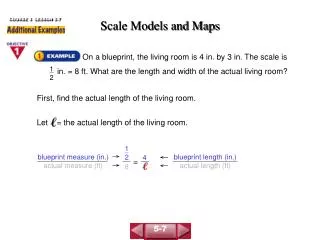
Types of scale • Large-scale maps. • Representation “closer” to the ground. • Houses, fields, etc. can be depicted. • 1:250,000 and below is large scale. • Four miles to the inch. • City maps, real estate (cadastral) maps, construction maps.
Types of scale • Medium scale maps. • Road maps, airway maps. • 1:250,000 to 1:1,000,000. • 4 to 16 miles per inch.
Types of scale • Small scale maps. • Above 1:1,000,000. • Used in atlases, books, and magazines.