The Impact of World War II: Mobilization, Society, and Atomic Diplomacy (1941-1945)
This comprehensive analysis of World War II (1941-1945) explores key events that led to the U.S. entering the war, including the attack on Pearl Harbor, and the mobilization of national resources and society. It examines the Manhattan Project and the significance of Los Alamos, alongside the wartime experiences of Americans, including societal changes and the internment of Japanese Americans. The strategic military efforts in Europe and Asia, along with the effects of the atomic bomb on post-war diplomacy, highlight the complexities of wartime America and its lasting impacts.

The Impact of World War II: Mobilization, Society, and Atomic Diplomacy (1941-1945)
E N D
Presentation Transcript
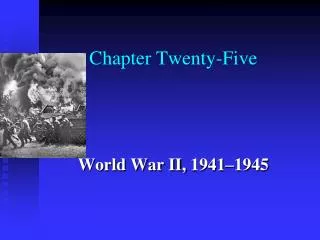
Chapter Twenty-Five World War II, 1941–1945
Part One: Introduction
Chapter Focus Questions • What events led to Pearl Harbor and the declaration of war? • How were national resources marshaled for war? • What characterized American society during wartime? • How were Americans mobilized into the armed forces? • How was the war pursued in Europe and Asia? • How did the atomic bomb affect diplomacy?
Part Two: Los Alamos, New Mexico
Los Alamos • The Manhattan Project . • Los Alamos. • Secrecy from the outside world. • J. Robert Oppenheimer.
Part Three: The Coming of World War II
The Shadows of War • Great Depression • Breakdown of political order. • Militaristic authoritarian regimes • Japan, Italy, and Germany • Manchuria, China. • Ethiopia. • Czechoslovakia.
American Opinion on the European War • Media: Gallup Polls
Isolationism • WWI seen as mistake. • College protested war. • Neutrality Acts. • “America First” • FDR: military preparedness
FIGURE 25.1b Gallup Polls: European War and World War I, 1938–1940
Roosevelt Readies for War • Poland, 1939. • Blitzkrieg : • Denmark • Norway • Belgium • France. • FDR pushed for military money. • Third term—expansion.. • Atlantic Charter.
Pearl Harbor • The Japanese threats. • FDR cut off trade. • Pearl Harbor. • War.
Part Four: Arsenal of Democracy
Mobilizing for War • Mobilization laws. • Office of War Information. • New Deal agencies vanished.
Organizing the Economy • US industrial capacity. • Civilian firms converted. • Unprecedented economic boom. • Western and Southern firms benefit. • Farm profited, but small farms disappeared. • Chart: Effects of War Spending
New Workers • Labor demand. • Female workers. • Workers’ wages went up.
Wartime Strikes • Prior to war, militant unions struck. • During war: • no-strike pledges • Increased membership and won benefits • African-American membership doubled. • Federal antistrike legislation.
Part Five: The Home Front
Families in Wartime • Marriage rates up. • Housing shortage. • One-parent households. • Child-care issues. • Juvenile crime. • Dropout rates. • Public health improved.
The Internment of Japanese Americans • 112,000 Japanese interned; • SCOTUS upheld policy. • 1988 , Congress voted for reparations and apologized.
“Double V”: Victory at Home & Abroad • “Double V”: • victory overseas • equal rights at home. • FDR banned discrimination in defense industries. • Civil rights organizations emerged, grew. • 1 million blacks left South. • Violent resistance from local whites.
Zoot-Suit Riots • Resentment Mexican Americans exploded. • The zoot-suit riots. • Mexican Americans served.
Popular Culture and the “Good War” • Popular culture. • Southerners brought musical styles. • Entertainment emphasized wartime spirit.
Part Six: Men and Women in Uniform
Creating the Armed Forces • Maps: Wartime Army Camps • Draft began before war. • The officer corps: • Professional • Conservative • Autocratic. • Junior officers close to troops.
Women Enter the Military • Women’s divisions. • Most women stayed in US. • Clerical duties • health-related duties • Aviation. • Sexual activity monitored • Racial segregation.
Old Practices and New Horizons • 1 million African Americans served. • Segregation at every point. • Many racial or ethnic minorities served. • In Europe, troops met a mixed welcome.
The Medical Corps • The risk of injury was much higher. • Battle fatigue. • Variety of medical personnel. • True heroes: the medics.
Prisoners of War • POWs in German camps. • POWs in Japanese camps. • German POWs. • Japanese POWs.
Part Seven: The World at War
Soviets Halt Nazi Drive • 1st year, war news “all bad.” • Soviets bore brunt. • Stalingrad.
The Allied Offensive • Soviets appealed for “second front”. • North Africa, Italy. • Casablanca : seek unconditional surrender. • Air bombardment: • weakened the economy • undermined civilian morale • crippled German air force
The Allied Invasion of Europe • Italy out of the war. • D-Day. • Paris. • Battle of the Bulge. • May 8, 1945, Germany surrendered.
The War in Asia and the Pacific • Map: The War in the Pacific • Japanese advances stopped June 1942. • Naval battles and island hopping. • Philippines, Iwo Jima, and Okinawa. • Bombing Japanese cities. • Stopping Soviets.
Part Eight: The Last Stages of the War
The Holocaust • Nazi’s systematic extermination. • War Department vetoed camp attacks.
The Yalta Conference • The “Big Three”. • Atlantic Charter fell. • FDR held idealism for global peace. • FDR dies, April ‘44.
The Atomic Bomb • Harry S. Truman. • Tough with Soviets. • Potsdam. • Atomic bombs. • Peace with slight policy modification possible. • Truman claimed bomb would shorten war.