Download
1 / 6
60 likes | 190 Vues
This document discusses the advantages and disadvantages of LVDS (Low-Voltage Differential Signaling) and optical solutions for data transmission in the PHENIX upgrades. It covers the benefits of LVDS, including its size, power efficiency, and reduced complexity, as well as its rad-tolerance up to 50kRad. The need for serializers in optical setups, potential ground loops, and the development of a versatile optical daughter card are examined. Serializer options like TLK1501 and GLINK are mentioned, alongside design timelines and performance calculations related to readout cards and data flow.

E N D
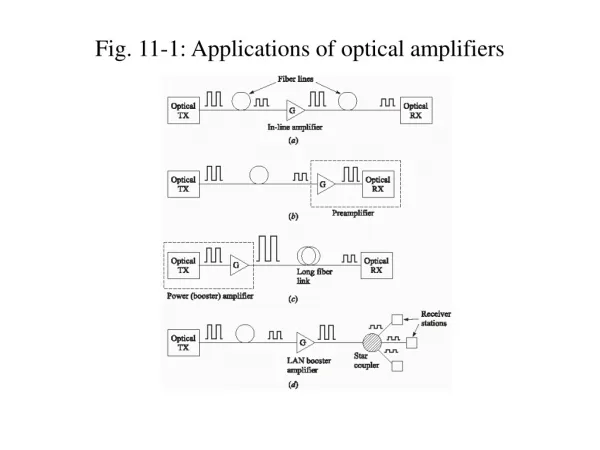
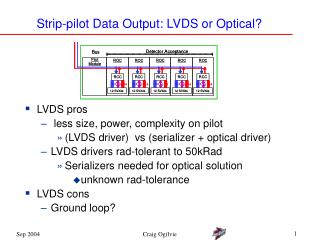
Strip-pilot Data Output: LVDS or Optical? • LVDS pros • less size, power, complexity on pilot • (LVDS driver) vs (serializer + optical driver) • LVDS drivers rad-tolerant to 50kRad • Serializers needed for optical solution • unknown rad-tolerance • LVDS cons • Ground loop? Craig Ogilvie
Optical Daughter Card • We started work on daughter card that could either • Transmit data from FEM to DCM, or from pilot to FEM • Make it general for use in all PHENIX upgrades Craig Ogilvie
Daughter card Serializer 16 bit Optical driver clock Optical Daughter Card • In FEM, less constraints size, rad-hardness • Serializer options • Depends on encoding 8B/10B or CIMT, Chi? • TLK1501 (8B/10B) , GLINK 3.3V (CIMT) • Optical drivers, many, Agilent HFBR-5912 Craig Ogilvie
Schedule • Design complete end of September • Test board back by mid-October • Goal • complete this simple task, • work with Vince/Chi to see if we can help on other parts of the system Craig Ogilvie
backup Craig Ogilvie
Strip Requirements (TVC March 04) • Two readout cards (ROC) per sensor • Each ROC has 6 SVX4 + FPGA / ASIC • 8 ROCs per ladder • 48 svx4 per ladder • Volume per SVX4 • Each hit = 16 bit word • 1 header • Total words/svx4 = 1+(num hits) = 1+(occ*128) • Volume per ladder • Total words/ladder = 48+(occ*6144) • Time = (48+(occ*6144))/40 MHz • < 40 microsec if occ < 25% • Serialize each 16 bit word at 40 MHz Craig Ogilvie