Kathy zoghby
This study investigates the effectiveness of team-based learning (TBL) in a non-majors Human Genetics course at the University of Richmond, which emphasizes engaging students who are less inclined toward science. We will survey demographics, academic performance, and interest in science, and compare final grades and exam scores to assess whether TBL enhances learning outcomes. The research aims to understand how team-based strategies can foster greater knowledge retention and interest among students outside the science major sphere.

Kathy zoghby
E N D
Presentation Transcript
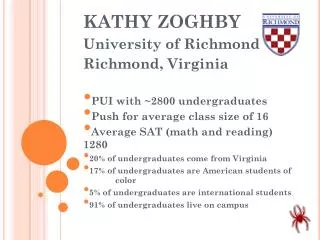
Kathy zoghby University of Richmond Richmond, Virginia PUI with ~2800 undergraduates Push for average class size of 16 Average SAT (math and reading) 1280 20% of undergraduates come from Virginia 17% of undergraduates are American students of color 5% of undergraduates are international students 91% of undergraduates live on campus
Reason for applying to BSPRR • Non-majors science students in Human Genetics course • Challenge of engaging this resistant population • May, 2009 I attended the Teaching Case Studies in Science workshop, Buffalo, NY and ASMCUE • Class was re-created using the active learning pedagogy of team-based learning (TBL)
Can the use of team-based learning in a non-majors Human genetics classroom lead to Higher student learning gains?
Research Design • Survey of demographics – GPA, class year, major, genetics information background • Pre-class interest in science survey (Likert scale) • Compare final grades and final exam scores • Genetics Concept Assessment (Smith, et al., 2008) • Selected questions from assessment and correlate with answers on post science knowledge survey(Likert scale) • Does team-based learning increase potential for non-majors science learning gains……… STAY TUNED