

SlideServe
Menu
Préférences
© SlideServe · v2026

Immanuel Kant

sofia avatar
8 diapositives · 1.2K Views · Jul 19, 2014

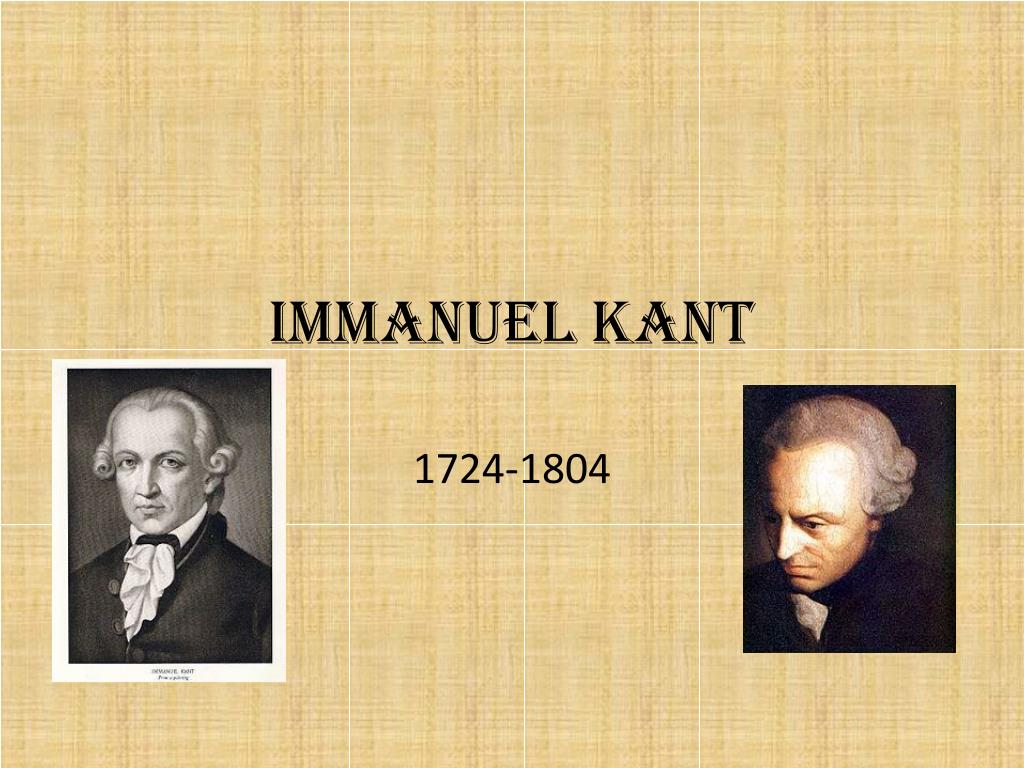
Immanuel Kant. 1724-1804. Biography Kantian epistemology (how do we know what we know?) Problems from Rousseau and Hume Shift to the question of judgment (not “the apple is red” but “I know the apple is red” The Critique as fundamental mode . What kind of judgments”. Analytic synthetic
Immanuel Kant - slide 1
01 / 8Immanuel Kant
1 / 17

Télécharger la présentation

Immanuel Kant
Une image / un lien ci-dessous est fourni (tel quel) pour télécharger la présentation

Politique de téléchargement : le contenu du site vous est fourni TEL QUEL pour votre information et votre usage personnel ; il ne peut être vendu, concédé sous licence ni partagé sur d’autres sites sans l’accord de son auteur.Le contenu vous est fourni TEL QUEL, pour votre information et votre usage personnel uniquement. Téléchargez la présentation en cliquant sur ce lien. Lors du téléchargement, si vous ne parvenez pas à télécharger une présentation, l’éditeur a peut-être supprimé le fichier de son serveur.Pendant le téléchargement, si vous ne parvenez pas à obtenir une présentation, le fichier a peut-être été supprimé par l’éditeur.

F I N

Plus de contenu associé

Transcription de la présentation
  1. Immanuel Kant 1724-1804

  2. Biography • Kantian epistemology (how do we know what we know?) • Problems from Rousseau and Hume • Shift to the question of judgment (not “the apple is red” but “I know the apple is red” • The Critique as fundamental mode

  3. What kind of judgments” • Analytic synthetic • A priori objects have every change has a cause • extension • A posteriori Mont Blanc is 4610 meters high

  4. How are synthetic a priori judgments possible? • Is there something that is human beyond being French, English etc? • Possibility of communication • Do I have reason to believe that I belong to a universal community • Significance of the fact that we do understand one another • These agreements are formal • Thus we are formally in a community • There is a higher truth which we cannot attain • (distinction of noumenaland phenomenal)

  5. What is enlightenment? • “Dare to know” Why indeed do you hurry to remove things hurtful to your eye, while if something is harmful to your soul, you put off the time for curing it till next year? Who begins a project has it half done; dare to know; begin! Whoever postpones the hour of living rightly is like the yokel who is waiting until the river runs out: but it will glide onwards and continue to glide forever in its flow. (Horace, Epistles 1.2.40)

  6. Who is enlightened? • Having one’s own voice • The sources of immaturity • Public versus private • What conditions are necessary to speak as a free person?

  7. The Categorical Imperative • What principle makes moral judgments possible? • “Act only on that maxim which you can at the same time make a universal law” • Examples • Suicide • Lying • monogamy

  8. Politics and International Relations • States in relation to each other • When is war justifiable? • Towards a Perpetual Peace • The League • Six articles that will reduce the likelihood of war • Idea for a Universal History • What makes for progress?