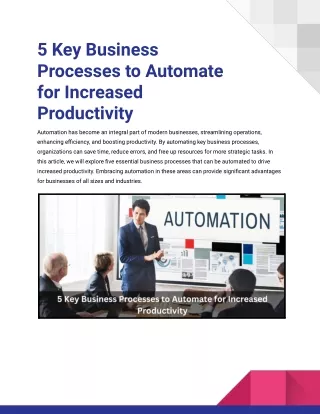
Why Manual HR Processes Kill Business Productivity
Manual HR processes waste time, cause errors, and slow growth. Learn how they hurt business productivityu2014and discover smarter, automated HR solutions.

Why Manual HR Processes Kill Business Productivity
E N D
Presentation Transcript
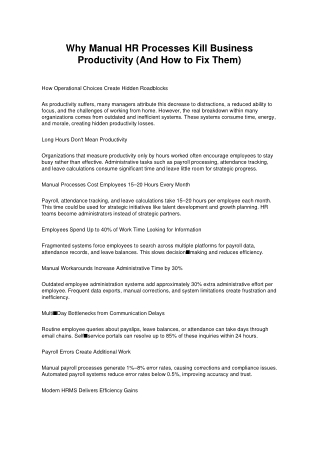
Why Manual HR Processes Kill Business Productivity (And How to Fix Them) How Operational Choices Create Hidden Roadblocks As productivity suffers, many managers attribute this decrease to distractions, a reduced ability to focus, and the challenges of working from home. However, the real breakdown within many organizations comes from outdated and inefficient systems. These systems consume time, energy, and morale, creating hidden productivity losses. Long Hours Don't Mean Productivity Organizations that measure productivity only by hours worked often encourage employees to stay busy rather than effective. Administrative tasks such as payroll processing, attendance tracking, and leave calculations consume significant time and leave little room for strategic progress. Manual Processes Cost Employees 15–20 Hours Every Month Payroll, attendance tracking, and leave calculations take 15–20 hours per employee each month. This time could be used for strategic initiatives like talent development and growth planning. HR teams become administrators instead of strategic partners. Employees Spend Up to 40% of Work Time Looking for Information Fragmented systems force employees to search across multiple platforms for payroll data, attendance records, and leave balances. This slows decisionImaking and reduces efficiency. Manual Workarounds Increase Administrative Time by 30% Outdated employee administration systems add approximately 30% extra administrative effort per employee. Frequent data exports, manual corrections, and system limitations create frustration and inefficiency. MultiIDay Bottlenecks from Communication Delays Routine employee queries about payslips, leave balances, or attendance can take days through email chains. SelfIservice portals can resolve up to 85% of these inquiries within 24 hours. Payroll Errors Create Additional Work Manual payroll processes generate 1%–8% error rates, causing corrections and compliance issues. Automated payroll systems reduce error rates below 0.5%, improving accuracy and trust. Modern HRMS Delivers Efficiency Gains
Organizations adopting modern HR systems experience: - 70–80% reduction in administrative time - 90% faster reporting - 95% fewer payroll errors - RealItime compliance monitoring Context Switching Destroys Focus Switching between disconnected tools for attendance, payroll, approvals, and communication reduces focus and productivity. Unified platforms streamline workflows and reduce fatigue. Administrative Work Erodes Core Roles Employees hired for specialized roles often spend time on administrative tasks. This reduces engagement and morale. Poor Data Visibility Leads to Poor Decisions Without centralized data, managers rely on assumptions instead of insights. Integrated systems provide clear visibility into workforce trends and costs. The Financial Case Modern HRMS solutions often deliver ROI within 6–12 months. Organizations recover productive hours, reduce compliance risks, and improve employee satisfaction. How to Start the Transformation Assess timeIconsuming tasks, recurring errors, and frustration points. Automating payroll and introducing selfIservice portals can save significant time and reduce emails. LongITerm Cultural Gains Efficient systems increase trust, creativity, and collaboration. HR becomes a strategic partner, and managers focus on coaching instead of micromanagement. Choosing Progress Processes that worked for small teams often fail at scale. True productivity issues usually stem from inefficient systems, not people. Organizations unlock potential by adopting efficient workflows and modern tools.