Understanding Solar Energy: Types, Benefits, and Costs
110 likes | 246 Vues
Solar energy is the conversion of sunlight into electricity, mainly through four types: passive, active, high temperature, and photovoltaic systems. Passive solar energy utilizes natural sunlight without mechanical systems, while active systems employ equipment like pumps and fans to store energy. Photovoltaic cells convert sunlight into direct current, contributing to electricity generation in over 100 countries. Despite having initial costs, such as $20,000 for a residential system, government rebates can lower expenses. Solar energy offers pollution-free, reliable electricity, especially valuable in remote areas.


Understanding Solar Energy: Types, Benefits, and Costs
E N D
Presentation Transcript
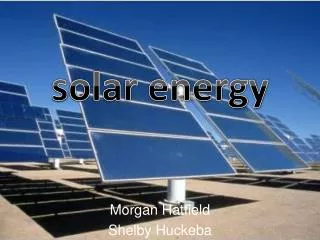
solar energy Morgan Hatfield Shelby Huckeba
Solar energy is the conservation of sunlight into electricity. • There are multiple types of solar energy: • Passive • Active • High temperature • Photovoltaic
passive • Passive solar energy retrieves sunlight without the use of mechanical systems. • An example of this type of solar energy would be a solarium that faces the equator.
active • Active solar technology converts energy into light, heat, ventilation/cooling and stores heat. • They use equipment (pumps and fans) as opposed to passive energy. • They have higher solar saving functions.
high temperature • A type of technology to harness solar energy for heat. • There are different kinds: low, medium, and high collectors. • Helps with heating, cooling and ventilation.
photovoltaic • A method of generating electrical power from solar radiation. • It converts sunlight into direct current energy. • Used in over 100 countries. • Also known as solar cells.
Storing solar energy… • Battery banks are used to store electricity generated by photovoltaic systems. If there is a surplus of energy, battery banks are used to store it. • Thermal mass- absorbs heat during the day and slowly releases it at night. • Water tanks- transfers heat to the water in the tank.
Solar energy is widely used in Switzerland because of green policies for electricity providers. • The US has introduced solar energy to reduce pollution. • It is used for TV and radio, transportation signaling, pipelines, • It is highly reliable and requires little maintenance so it is ideal for places that are hard to get to.
cost • A solar hot water system is around $3,000. • A photovoltaic system is around $9,000. • The average American family living in a 3 bedroom home will cost around $20,000 but the government gives rebates to encourage the use of these solar methods. • The rebates can reduce the cost for one of these systems by about $9,000.
pros • Gives off no pollution • Produces electricity quietly as opposed to current methods • Harnesses energy in remote locations • Installing solar panels is more cost effective than high voltage wires • After installation, a free source of electricity that pays off over time.
cons • The initial cost of building the solar system. • Only able to generate electricity during the daytime. • Easily effected by weather. • Large amounts of pollution effects the production of energy in cities.