Effective Interviewing Techniques for Strategic Planning: A Comprehensive Guide
This guide offers essential tips and techniques for conducting successful interviews in the context of strategic planning. It emphasizes the importance of preparation, including researching your subject and developing a question set focused on open and close-ended inquiries. Key elements include understanding the dynamics of conversation, effective note-taking, and observing body language. Practice is crucial, and interviewers are encouraged to foster a comfortable environment and maintain an active listening approach to enhance the depth of the conversation.

Effective Interviewing Techniques for Strategic Planning: A Comprehensive Guide
E N D
Presentation Transcript
Strategic Planning • Strategic planning is an organization's process of defining its strategy, or direction, and making decisions on allocating its resources to pursue this strategy.
What are you going to ask? • Who, What, Where, When, Why and How • Do research before you interview • Feel comfortable in what you are asking • Have someone review and discuss your questions
Types of Questions • Close ended questions vs open ended questions • Leading questions • Multiple questions to approach one answer • Do not stick to the order you wrote your questions in • Create a shorter question sheet • Conduct practice interviews to see how long they will take
Preparation • Gather as much information about the individual as possible • Google your teacher before you meet with them • Learn of other people to interview • External vs internal interviews
Observations • Listen • Look for body language • Compare interviews • Be cognizant of time “interviewers talk 20 percent of the time during the interview, and listen 80%”
Take Notes • Record conversation • Bring more than one person • Type up your notes the same day you conducted the interview
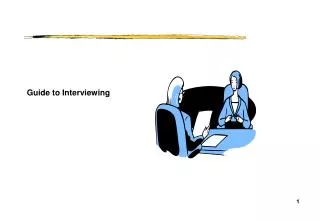
Conducting an Interview • We mostly see interviewing on TV • Use different techniques for different interviews (this is not a survey but an interview) • It is a conversation- you can only interview as good as you can converse • Focus groups- good for tough issues
Tips for interviewing • Probe- follow up questions • Don’t use too large of words • “Play Dumb” • “You know what I mean”- don’t allow that • Take note if you think they are lying
Tips Continued • Don’t talk too much • Do not fill silences (wait five seconds) • Shy people fill with positive statements • Outspoken over prepared people tend to fill it with negative statements • Do not disagree with the person you are interviewing • It is okay if you don’t answer all of your questions
Problems I have Interviewing • I get nervous that I will influence the conversation • Teachers talked too much about state mandates, not skills they teach • Interview took too long • I had to constantly cut her off, no room for pauses
Listen to your interview Practice, Practice, Practice