
Respiratory System
E N D
Presentation Transcript
Respiratory System 2.2 Notes Part 3
What is it for? • Breathe in oxygen, breathe out carbon dioxide • Lungs important organs
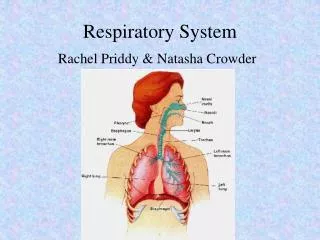
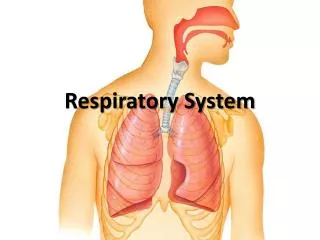
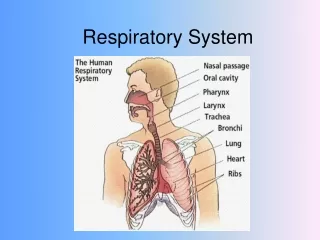
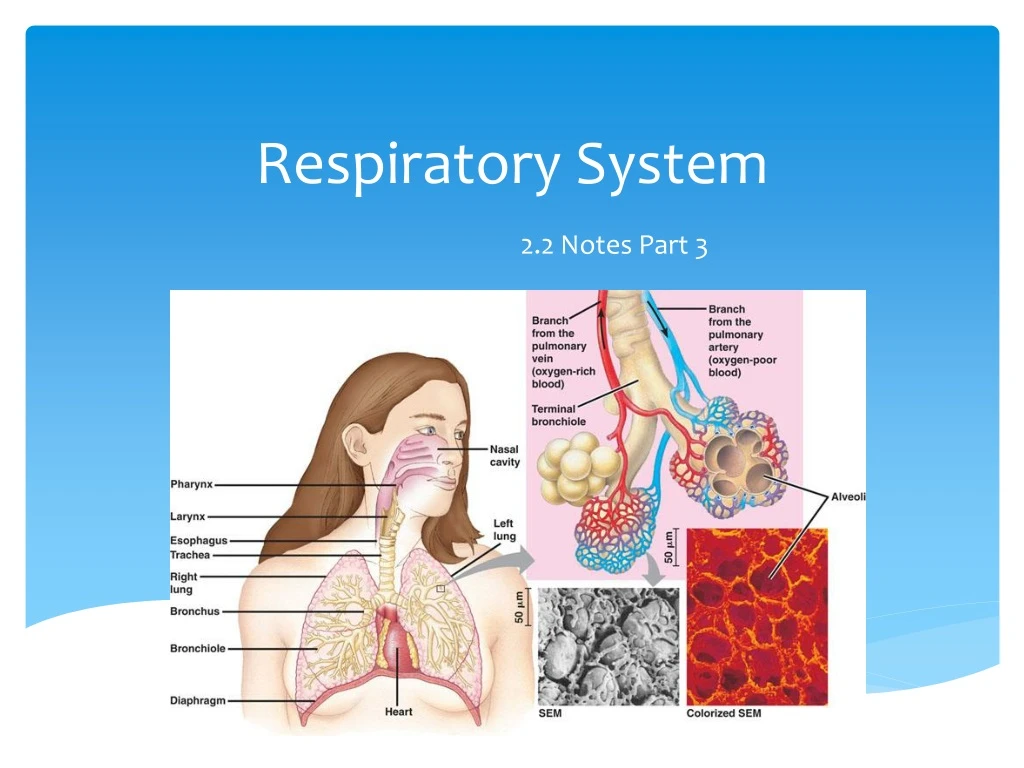
Order Air Travels to Your Lungs • Nasal Cavity- air is warmed and filtered by tiny hairs, called cilia, and mucus in your nose. The cilia and mucus trap dirt and other particles - back out the nostril or down into the digestive system • Pharynx • Epiglottis • Larynx- (Voice Box.) It contains your vocal cords. Which vibrate when air passes through them creating your voice • Esophagus • Trachea- Made up of C-shaped bands of cartilage that maintains the tubular shape • Bronchi- Air passes through these tubes and goes directly to the lungs • Lungs- Goes to tiny, thin- walled sacs called the alveoli. Where gas exchange takes place
Gas Exchange in the Alveoli • Alveolus surrounded by capillaries • Carbon dioxide diffuses into the alveolus, and oxygen diffuses the other way into the capillaries and binds with the red blood cells • The oxygenated blood returns to the heart to be pumped to the rest of the body • This entire process is called gas exchange
Smoking • Many respiratory diseases such as lung cancer and emphysema results from smoking tobacco products • Emphysema causes the alveoli walls to lose their elasticity, making breathing extremely hard as the disease progresses • Often people who have respiratory diseases also have a heart disease.
What is in a cigarette? • Smoking is the number one cause of lung cancer; there are over 4000 chemicals in a cigarette. • 50 are carcinogenic (Cancer- causing) • Top six most harmful chemicals in a cigarette are nicotine, tar, carbon monoxide, formaldehyde, hydrogen cyanide, and benzene • Smoking also destroys the cilia lining your respiratory
Homework Textbook Questions P. 95 #1-15 +18 Circulatory System stuff 1-6, 11, 13, 15 Respiratory Stuff 7-10, 12, 14, 18