Download
1 / 15
150 likes | 286 Vues
Join the K-2 ALPHA program led by Lisa Crates and Lisa Sutton, where students dive into the fascinating world of biomes through the lens of various scientific disciplines. Over the course of each semester, children will explore key concepts in science by examining ecosystems like rainforests, savannas, oceans, and grasslands. Utilizing Sandra Kaplan’s Depth and Complexity framework, students engage in critical thinking and inquiry-based activities that allow them to understand the unique characteristics of each biome, its inhabitants, and the environmental factors at play. Extra work, referred to as "Red" or "Yellow" folder activities, encourages further exploration at home or in class.

E N D
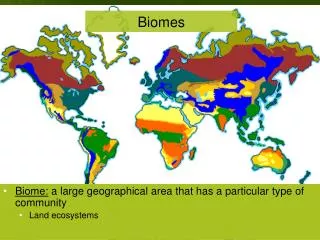
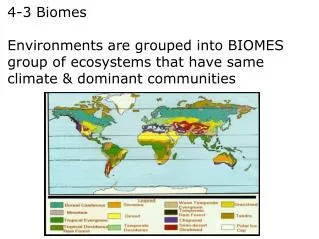
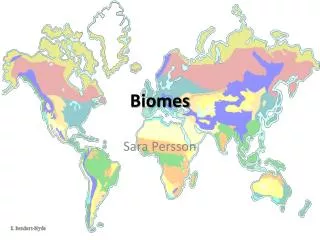
Biomes“Ology”and“Ologist” Lisa Crates and Lisa Sutton K-2 ALPHA
K-2 ALPHA • K-2 ALPHA is scheduled for 1 hour 1 day per week at the home campus. • We use Sandra Kaplan’s Depth and Complexity. • TheALPHA Curriculum for K-2 is: Biomes “Ology” and “Ologist”, we study a biome through the eyes of different sciences and scientists. • “Red” or “Yellow” Folder work is extra work that can be done in class or at home as an extension of what we are learning or critical thinking activities. • Report Cards are given at the end of each semester, it will show the sciences and scientists that we have studied that semester. ( No grades are given)
Biomes • Year “A” Year “B” Year “ C” • 1st Nine Weeks 1st Nine Weeks 1st Nine Weeks Rainforest Savanna Oceans • Grasslands • 2nd Nine Weeks 2nd Nine Weeks 2nd Nine Weeks • Rainforest Savanna Oceans • Grasslands • 3rd Nine Weeks 3rd Nine Weeks 3rd Nine Weeks • Rainforest Savanna Oceans • Grasslands • 4th Nine Weeks 4th Nine Weeks 4th Nine Weeks • Rainforest Savanna Oceans • Grasslands
Depth • Use the language of the discipline. What vocabulary terms are specific to content or discipline. (Acronyms, Special Phrases, Scientific Terms etc.) • Use details to define features or characteristics. Find examples to support opinions and ideas. (Parts, Factors, Attributes) • Look for patternsof recurring elements. What is the sequence or order of events? (Identify, Predict, Repetition) • Look for trends or forces that cause events to occur. Identify patterns of change over time. (Influence - forces direction)
Depth • Identify the unanswered questions. What information is unclear, missing or unavailable? (Missing parts, Incomplete Ideas, Unsolved Issues) • Identify and explain therules or how information/events are organized in the discipline. What guidelines or regulations affect it?. (Order, Reasons, Explanation) • Be sensitive to the ethical considerations in the problem/issue/discipline. (‘tug-of-war’ or conflict needing resolution). (Pro and Con, Judging, Point of View) • Look at big ideas that can be supported by the evidence from a body of knowledge, including facts, rules, trends, patterns, etc.. (Make Generalizations, Summarize, Main Idea)
Complexity • Changes over Time: Lookat ideas/information over time. How and why things change. (Past-Present-Future) (Connecting Points in Time, Compare and Contrast) • Different Perspectives: Lookat ideas/information from different points-of-view. How would others see the situation differently. (Different Roles and Knowledge- Opposing Viewpoints) • Across the Disciplines: Connect the area of study to other subjects within, between and across disciplines. (Connect , Associate, Integrate, Cross-Curricular Study)
Cartography Cartographer
Botany Botanist
Ornithology Ornithologist
Entomology Entomologist
Herpetology Herpetologist
Ichthyology Ichthyologist
Mammalogy Mammalogist
Arachnology Arachnologist
K-2 ALPHA Lisa Crates lcrates@mckinneyisd.net • Bennett Tues. PM • Burks Fri. AM • Caldwell Fri. AM • Johnson Wed. AM • Malvern Mon. PM • McGowen Thurs. AM • Slaughter Mon. AM • Walker Thurs. PM • Webb Wed. PM • Wolford Tues. AM Lisa Sutton lsutton@mckinneyisd.net • Eddins Mon. PM • Finch Wed. AM • Glen Oaks Tues. AM • Minshew Thurs. PM • McClure Mon. AM • McNeil Fri. AM • Press Thurs. AM • Valley Creek Wed. PM • Vega Wed. AM • Wilmeth Tues. PM