Download
1 / 19
190 likes | 308 Vues
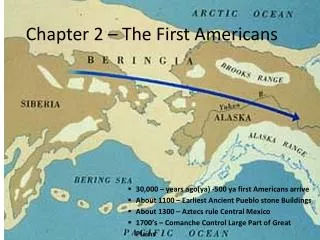
Chapter 2 delves into the early history of the First Americans, exploring how massive glaciers shaped the landscape and influenced migration patterns. It discusses the development of agriculture and the emergence of civilizations characterized by organized governments, religions, and cultures. Readers will learn about key societal practices such as potlatches, clan structures, and the significance of surplus food. The chapter highlights the importance of irrigation, trade systems, and various types of dwellings like lodges and longhouses in the lives of these early peoples.

E N D
Glacier • A huge thick sheet of slowly moving ice _____________________ Mountain glacier Continental glacier
Migration • A movement from one place to another
agriculture • Farming or growing plants
civilization • A group of people living together with organized systems of government, religion, and culture.
surplus • Extra
Potlatch • A large feast that may last for several days. A meeting to distribute tribal wealth
Clan • A group of related families
Irrigation • A way of supplying water with streams, ditches, or pipes.
pueblo • The Spanish word for town
staple • A main crop or component of a diet
ceremony • An event at which people gather to express important beliefs
lodge • A type of home that Plains Indians made using bark, earth, and grass
nomad • A person who moves around and does not live in one place.
travois • Equipment similar to a sled made from two long poles
longhouse • A large house made out of wood poles and covered with bark
confederation • A type of government in which separate groups of people join together, but local leaders still make many decisions for their group.
wampum • Pieces of carefully shaped seashell made into strings or belts.
barter • To exchange goods without using money