Understanding the Cultural Conflicts of the 1920s: Prohibition, the KKK, and the Scopes Trial
250 likes | 351 Vues
This lesson explores the cultural conflicts of the 1920s, focusing on three key events: the failure of Prohibition, the resurgence of the Ku Klux Klan, and the significance of the Scopes Trial. Prohibition aimed to curb alcohol consumption but faced enforcement challenges, leading to rampant bootlegging and organized crime. The KKK reasserted its influence by promoting nationalism and racial purity, targeting immigrants and minorities. Lastly, the Scopes Trial showcased the clash between science and fundamentalism over evolution teaching, highlighting societal tensions that defined the era.


Understanding the Cultural Conflicts of the 1920s: Prohibition, the KKK, and the Scopes Trial
E N D
Presentation Transcript
Cultural Conflicts Scopes Trial KKK Prohibition Fails Quotas
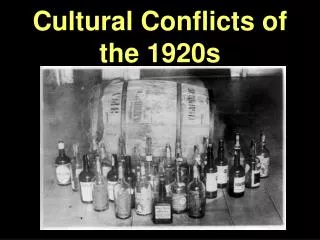
Fed. agent destroying beer barrel Prohibition Fails Laws were hard to enforce
Gangsters began to run the illegal alcohol markets Speakeasies & Bootleggers?
#2 - Ku Klux Klan 1920s = KKK reemerges Membership: 5 million Members believe they are “pure” Americans & are guardians of society
Klan stressed nationalism & racial purity Didn’t like immigrants, Jews, Catholics, & urban culture
Where are they coming from? Remember the New Immigration? Remember the New Immigration? Remember the New Immigration?
Limits on Immigration 1921: 3% of total # of immigrants allowed from a particular country (based on 1910 census)
National Origins Act Reduced quota to 2% (Based on 1890 census) 1924 Excluded Asians completely
#4 - The Scopes Trial 1925 John Scopes TN Science teacher who taught theory of evolution
Butler Act: prevented any teaching other than “Divine Creation” in schools Who cares? What’s the problem? Fundamentalism: The Bible tells the literal truth
William JenningsBryan (Prosecution) Clarence Darrow (Defense Attorney)
Scopes Monkey Trial Nationwide radio & newspaper coverage