What Is Biotechnology?
190 likes | 210 Vues
Discover the world of biotechnology and its various applications, from genetic engineering to the production of recombinant DNA. Explore the benefits of biotechnology in medicine, agriculture, and industry.


What Is Biotechnology?
E N D
Presentation Transcript
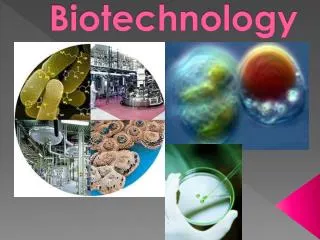
What Is Biotechnology? • Any technique that uses living organisms or substances from those organisms to make or modify • a product • improve plants or animals • to develop microorganisms for specific uses
WHAT COULD SOME POSSIBLE REASONS BE???? • Adding a clotting agent to the blood that would help dissolve clots. • TPA--- DONE!!!!! • What if: • Cancer free genetics • HIV free genetics • Creating something that was resistant to these diseases???IS IT POSSIBLE?
Genetic Engineering • Genetic engineering is taking one or more genes from one organism and ….. • Transferring them to another organism • Putting them back into the original organism in different combinations GMO’s: • Transgenic Organisms: Bt Corn ( pest resistant) • Recombinant DNA (rDNA): rInsulin
What are the Benefits of Biotechnology? • Medicine • Human • TPA, Dissolve blood clots • Cancer Treatments • Embryo Screening • Veterinary • Hybrid Dogs • Surrogate Cows • Environment • Clean up oil spills (bioremediation) • Agriculture • Bt Corn ( pest resistant) • Food products • Cheese, Yogurt, Fermented foods, Bread, Alcohol) • Industry/manufacturing • Better cleaners
Insulin • The first commercial product made by genetic engineering (1976). • Insulin is the hormone used to control their blood sugar levels in diabetics • First sold in 1982, (S. San Francisco) PIGS E. Coli
Biotech Tools Restriction Enzyme: an enzyme that cuts DNA Ligase: an enzyme that pastes DNA back together • re-establishes the ester bond Gene of Interest: Example Insulin Gene Recipient Genome: E. coli plasmid • Plasmid: Circular DNA that bacteria have in addition to the normal chromosome
Restriction Enzyme Restriction Enzyme: an enzyme that cuts DNA • Natural function of restriction enzymes • To protect bacteria against viruses. • Digest foreign (e.g. viral) DNA. • Restriction enzymes are isolated from bacteria
A closer look…. EroR1 EcoR1 5’….ACTGTACGAATTCGCTA….3’ 3’….TGACATGCTTAAGCGAT….5’
A closer look…. EcoR1 AATTCGCTA….3’ GCGAT….5’ 5’….ACTGTACG 3’….TGACATGCTTAA “sticky ends” -can bind with other DNA molecules with the same overhangs
DNA Ligase DNA ligase 5’….ACTGTACAGATCCGCTA….3’ 3’….TGACATGTCTAGGCGAT….5’ DNA ligase
Let’s Try it • Genetic Engineering DEMO TAATGGATCCTT: Gene of Interest G GATCC BamH1 Sequence G AATTC EcoR1 Sequence • Crime Scene Activity • Tape: Ligase • Scissors: Restriction Enzyme
Create Your Own Recombinant DNA ! • Using the shorter sequence, create your plasmid, remember they are circular • Highlight the gene of interest TAATGGATCCTT • Figure our what restriction enzyme to use.GAATTC EcoR1 Sequence CTTAAG GGATCC BamH1 Sequence CCTAGG • The plasmid and DNA must be cut with same Restriction Enzyme • Create your Recombinant DNA.
HOW IS IT DONE?Steps for genetically engineering Insulin • Take a human cell and remove the nucleus • Extract the DNA (genome) from the nucleus • Locate the Insulin gene • Cut out the Insulin gene with a restriction enzyme • Take a Bacterial Plasmid and cut open with the same restriction enzyme • Place the Insulin gene into the bacterial Plasmid; you now have recombinant DNA. • Place the recombinant DNA back into an Bacterial Cell (transformation) • The Bacteria will now produce insulin.
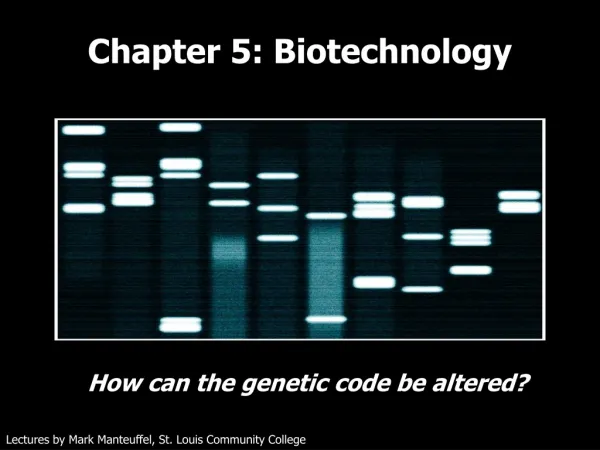
Gel electrophoresis • We can use the fragments made by the restriction digestion to make a DNA fingerprint • DNA is negatively charged (due to phosphate backbone) • When we pump electrical charge into the buffer, it will make the DNA move towards the positive charge • Sorts DNA by length • Smaller DNA fragments travel further in the gel
Imagine you are a DNA molecule • If you were inside an agarose gel, your environment would resemble a very dense spider web. • The smaller the DNA fragment, the easier it is to get through the web. • This creates a DNA Fingerprint
Crime Scene DNA Who Committed The Crime?
Crime Scene Activity • Digest (Cut) the DNA samples with the restriction enzymes • Separate the fragments on the Electrophoresis Gel • Observe the differences and similarities to determine the guilty suspect.
Crime Scene Analysis • Restriction Digestion with EcoR1 (GAATTC) • Repeat with BamH1 (GGATCC) • Exclude Suspects • Plot fragments on Mock Gel (based on fragment sizes) • Answer questions. • Answer Wrap Questions • Find News article on DNA Fingerprinting