Download
1 / 10
100 likes | 242 Vues
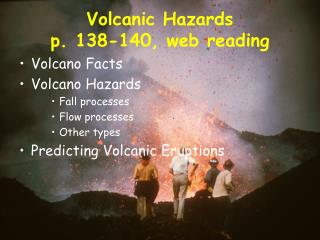
Explore the dangers posed by volcanic hazards, including lava flows, explosive eruptions, and ash falls. Educate yourself on when volcanic events occur, how to respond effectively, and the importance of research in predicting these natural phenomena. Learn about the hazardous interactions between magma and water, which can lead to geysers, hot springs, and lahars. Understand the variety of materials ejected during eruptions, such as volcanic ash, bombs, and pyroclastic flows, and the risks they present to people and the environment.

E N D
Limiting Danger from Hazards • Warning • Know when event is happening • Education • Know what to do when an event happens • Research • Know what will happen in an event
‘Water’ Volcanoes • Water that can be hazardous that are due to magma or Lava • Geysers • Hot Springs • Fumaroles • Mud Pots
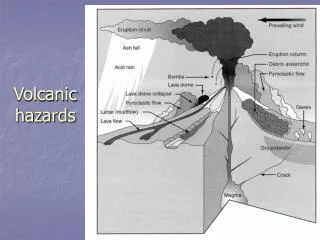
Gases • Release from within magma as pressure and temperature changes • Can cause explosive eruptions • Can poison plants and animals at surface • H2O, SO2, CO2, H2, HCl, H2S, Fl
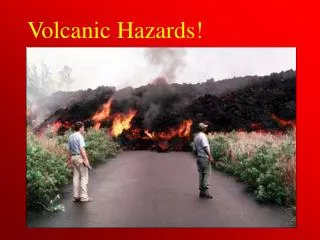
Lava Flows • Streams of molten rock • Some flow smoother and faster than others • Depends on • Temperature • Chemical make-up • Everything in the path of the lava is in danger • Knocked over • Surrounded • Buried • Burned • Melted
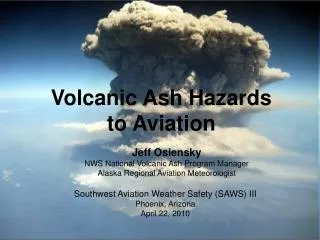
Explosions and “Stuff” that is Ejected During Eruptions • ‘Ash Fall’ • Tephra- lava and solid material, blasted into the air, during an eruption • Volcanic Ash/Dust- Small and very small material ejected during an eruption • Volcanic Bombs- Pebble sized to massive boulders of ejected material • Cinders- Small volcanic bombs the size of golf balls
Pyroclastic Flows • Fast moving flow of hot rock and gases • ‘Ash Flow’ • Could include molten rock as well • Rock includes small ash and large boulders • Can move at 80 km/h • Reach temperatures of 700º C
Landslides • Flow of rock and debris • Can be caused because weaker layers of rock give way and collapse • Landslide may allow for other hazards; explosion, lava flow, or lahars
Lahars • Mixture of water and rock fragments flowing down a volcano’s slopes • ‘Mud Flows’ • Water often comes from suddenly melted glaciers • May pick up more debris while moving down slope • Water can be very hot
Tsunamis • Eruptions can create huge waves in large bodies of water located near a volcano