Download

1 / 18
180 likes | 290 Vues
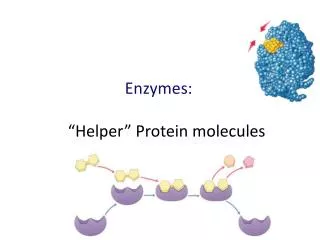
Enzymes are crucial protein molecules that act as catalysts in the chemical reactions essential for life. They facilitate the building and breaking down of molecules, crucial for processes such as digestion and synthesis. Each enzyme is specifically shaped to assist particular reactions, ensuring efficiency and effectiveness. They are not consumed in the reactions, allowing them to be reused. Factors like temperature and pH significantly affect enzyme activity, emphasizing the need for precise conditions for their optimal function. Understanding enzymes is vital for grasping the fundamental processes of biology.

E N D
Flow of energy through life • Life is built on chemical reactions
+ + Chemical reactions of life • Processes of life • building molecules • synthesis • breaking down molecules • digestion
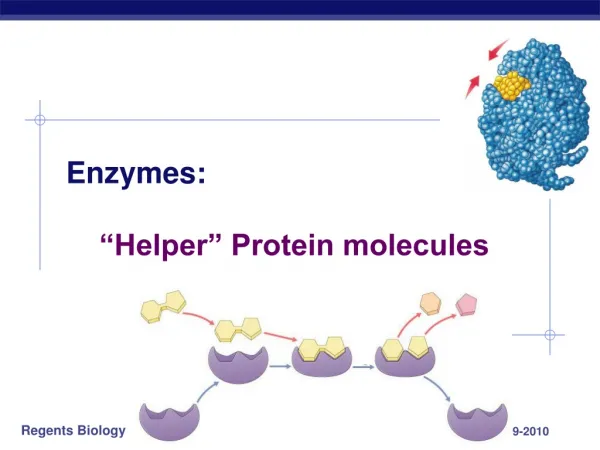
enzyme + enzyme + Nothing works without enzymes! • How important are enzymes? • all chemical reactions in living organisms require enzymes to work • building molecules • synthesis enzymes • breaking down molecules • digestive enzymes • enzymes speed up reactions • “catalysts” We can’t live without enzymes!
+ enzyme enzyme + Examples • synthesis • digestion
Enzymes are proteins • Each enzyme is the specific helper to a specific reaction • each enzyme needs to be the right shape for the job • enzymes are named for the reaction they help • sucrase breaks down sucrose • proteases breakdown proteins • lipases breakdown lipids • DNA polymerase builds DNA Oh, I get it! They end in -ase
active site Enzymes aren’t used up • Enzymes are not changed by the reaction • used only temporarily • re-used again for the same reaction with other molecules • very little enzyme needed to help in many reactions substrate product enzyme
It’s shape that matters! • Lock & Key model • shape of protein allows enzyme & substrate to fit • specific enzyme for each specific reaction
2 1 3
Enzyme vocabulary • Enzyme • helper protein molecule • Substrate • molecule that enzymes work on • Products • what the enzyme helps produce from the reaction • Active site • part of enzyme that substrate molecule fits into
What affects enzyme action • Correct protein structure • correct order of amino acids • why? enzyme has to be right shape • Temperature • why? enzyme has to be right shape • pH (acids & bases) • why? enzyme has to be right shape
Order of amino acids • Wrong order = wrong shape = can’t do its job! foldedprotein chain ofamino acids DNA right shape! foldedprotein chain ofamino acids wrong shape! DNA
Temperature • Effect on rates of enzyme activity • Optimum temperature • greatest number of collisions between enzyme & substrate • human enzymes • 35°- 40°C (body temp = 37°C) • Raise temperature (boiling) • denature protein = unfold = lose shape • Lower temperature T° • molecules move slower • fewer collisions between enzyme & substrate
37° Temperature humanenzymes What’s happening here?! reaction rate temperature
pH • Effect on rates of enzyme activity • changes in pH changes protein shape • most human enzymes = pH 6-8 • depends on where in body • pepsin (stomach) = pH 3 • trypsin (small intestines) = pH 8
pH stomachpepsin intestinestrypsin What’s happening here?! reaction rate 0 1 2 3 4 5 6 7 8 9 10 11 12 13 14 pH
SHAPE! For enzymes…What matters?