Understanding the Respiratory System: Structures, Functions, and Processes
This engaging lesson on the respiratory system covers essential structures, including the nose, nasal cavity, pharynx, larynx, trachea, bronchi, bronchioles, alveoli, and lungs. Students will learn how air is taken in and carbon dioxide is expelled, understanding the role of the diaphragm in ventilation. The session includes a thoughtful warm-up activity, a review of key terms, and a travel brochure project to describe the pathway of air through the respiratory system. Prepare for Quiz 5 on Monday, April 21st, 2014!

Understanding the Respiratory System: Structures, Functions, and Processes
E N D
Presentation Transcript
Principles of Health Science Day 1 Respiratory System
Thought for the Day & Warm-up List at least 4 structures of the respiratory system Thought for the Day… Warm-up http://padlet.com/wall/CHSHS13
Agenda • Objective: The student will be able to describe the structures, function and process of respiration. • Quiz 5- Monday, Apr 21st, 2014 • Respiratory System
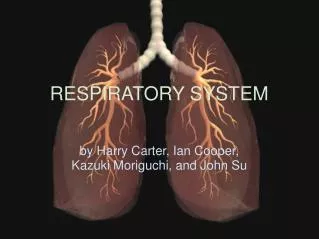
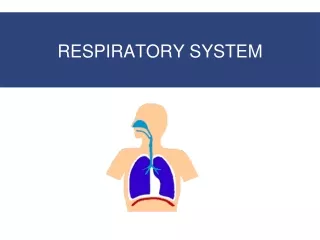
Respiratory System • Takes oxygen in and removes carbon dioxide • Consists of the lungs and air passages (continues)
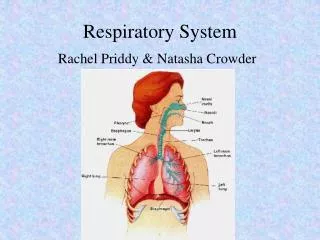
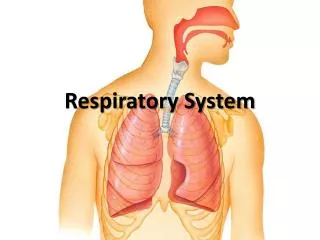
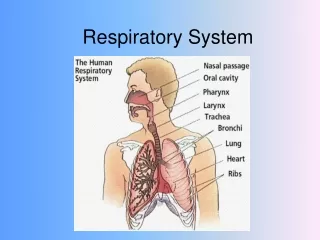
Structures of the Respiratory System • A. Nose/Nostrils • Opening where air enters • B. Nasal Cavity • Hollow space in the nose lined with mucous membranes • As air enters, it is warmed, filtered, & moistened • Cilia (tiny hair-like structures) trap dirt/particles • C. Sinuses • Cavities in the skull which also warm/moisten the air • Help in voice resonance
Structures of the Respiratory System • D. Pharynx • Throat • Helps carry air to the lungs & food to the stomach • Epiglottis (cartilage flap) prevents food from entering the respiratory tract • E. Larynx • Voicebox • Vocal cords vibrate to produce speech when air exits the lungs • F. Trachea • Windpipe • Tube from the larynx to the chest
Structures of the Respiratory System • G. Bronchus/Bronchi • Lower end of the trachea that divides to connect to the lungs • H. Bronchiole • Lower/smaller bronchi within the lungs • I. Alveoli • Cluster of thin-walled sacs surrounded by capillaries that exchange oxygen and carbon dioxide
Structures of the Respiratory System • J. Lungs • Organs of respiration • Right lung has 3 lobes (sections) • Left lung is smaller & has 2 lobes (sections) • K. Diaphragm • Muscle that makes breathing possible
Respiratory Structures Practice • Use these key terms to label your heart diagram. • Please USE A PENCIL! • Alveoli • Bronchiole • Bronchus • Diaphragm • Larynx • Left Lung • Nasal Cavity • Nose • Pharynx • Right Lung • Sinuses • Trachea
Respiratory Structures • A. Sinuses • B. Nose • C. Larynx • D. Right lung • E. Bronchus • F. Diaphragm • G. Alveoli • H. Bronchiole • I. Left lung • J. Trachea • K. Pharynx • L. Nasal cavity
Ventilation: Process of Breathing • Inspiration • Inhalation • Diaphragm contracts • moves down • Rib muscles contract • Rib cage expands
Ventilation: Process of Breathing • Expiration • exhalation • Diaphragm relaxes • moves up • Rib muscles relax • Rib cage gets smaller
Respiration • External Respiration • Exchange of carbon dioxide & oxygen between the lungs and blood stream • Internal Respiration • Exchange of carbon dioxide & oxygen between the tissue cells and blood stream
Diseases and Abnormal Conditions • Asthma • Narrowed bronchioles caused by spasms/swelling (triggered by allergies or exercise) • Bronchitis • Inflammation (swelling) of the bronchial tubes (caused by infection)
Diseases and Abnormal Conditions • Emphysema • Walls of alveoli deteriorate and lose their elasticity • Epistaxis • nosebleed
Diseases and Abnormal Conditions • Influenza—flu • Viral infection • Laryngitis • Inflammation of the voicebox
Diseases and Abnormal Conditions • Lung Cancer • Abnormal cell growth found mainly in the lungs of smokers • Pneumonia • Lung infection of the alveoli (continues)
Diseases and Abnormal Conditions • Rhinitis • Inflammation of the nasal mucous membranes • Sinusitis • Inflammation of the mucous membranes in the sinuses
Diseases and Abnormal Conditions • Tuberculosis (TB) • Infectious bacterial lung disease where lesions form in the lungs that can spread • Highly contagious
Activity • Create a travel brochure of the respiratory system (& cardiovascular). • Start from the beginning as air enters through the nose • Describe what happens as air travels through each of the respiratory structures (use #2 A-I) • Provide the STRUCTURE and FUNCTION of each! • Describe the actions of the diaphragm and rib muscles during • Inspiration • Expiration • Describe • How the Pulmonary Veins and Pulmonary Arteries relate to external respiration • How arteries, veins, & capillaries relate to internal respiration • Include at least 3 colored drawings relevant to what you are describing. • You may use the textbook as a reference. • This is DUE at the END of CLASS
Review & Looking Ahead… • Discussed: The structures, function and process of respiration. • Next class topic: Describe the function and process of respiration. • Quiz 5- Monday, Apr 21st, 2014 • Respiratory System
Activity • Create a travel brochure of the respiratory system. • Start from the beginning as air enters through the nose • Describe what happens as air travels through each of the respiratory structures (use #2 A-I in that order) • Provide the STRUCTURE and FUNCTION of each! • Describe the actions of the diaphragm and rib muscles during • Inspiration • Expiration • Describe • How the Pulmonary Veins and Pulmonary Arteries relate to external respiration • How arteries, veins, & capillaries relate to internal respiration • Include at least 3 colored drawings relevant to what you are describing. • You may use the textbook as a reference. • This is DUE at the END of CLASS
Principles of Health Science Day 2 Respiratory System
Thought for the Day & Warm-up How much air do you think your lungs can hold? Is the volume equivalent to a quart? Liter? Gallon? 2 gallons? Thought for the Day… Warm-up http://padlet.com/wall/CHSHS13
Agenda • Objective: The student will be able to describe the function and process of respiration. • Station Activities • Quiz 5- Monday, Apr 21st, 2014 • Respiratory System
Respiratory Rate Process of taking in oxygen and expelling carbon dioxide. • 1 inspiration + 1 expiration = 1 respiration (ventilation) • Put your hand on your chest or back to feel yourself inhale/exhale. • Count respirations for a full minute. • Normal Rate • At rest 12 – 20/min • What about during activity?
Lung Capacity • Lung capacity is the volume of air that can fill your lungs. • Vital capacity • the largest possible amount of air that can be exhaled after drawing a deep breath • Tidal volume • the amount of air taken in or expelled during normal breathing • Expiratory reserve • the amount of air that remains in the lungs after exhaling normally (it is the extra air that can be breathed out)
Respiratory Stations • Station #1: Diagnose the Disease/ Travel Brochure • Station #2: Respiratory Rate/ Travel Brochure • Station #3: Lung Capacity • Your group will have 20 minutes at each station. Be sure to record your findings on your individual packet. • You will turn in your packet and travel brochure at the end of class TODAY for a grade.
Activity • Create a travel brochure of the respiratory system. • Start from the beginning as air enters through the nose • Describe what happens as air travels through each of the respiratory structures in order (use #2 A-I) • Provide the STRUCTURE and FUNCTION of each! • Describe the actions of the diaphragm and rib muscles during • Inspiration • Expiration • Describe • How the Pulmonary Veins and Pulmonary Arteries relate to external respiration • How arteries, veins, & capillaries relate to internal respiration • Include at least 3 colored drawings relevant to what you are describing. • You may use the textbook as a reference. • This is DUE at the END of CLASS
Finishing Up: • You have 5 minutes to finish answering the packet questions. • When you are finished, take a tag • Write in your name & your Vital Capacity and stick it to the whiteboard along the appropriate measurement. • We will be able to compare our lung volumes amongst the class. • Turn in your packet and travel brochure to the blue basket when you are finished.
Station #1 Diagnose the Disease/Disorder • #1 Laryngitis • Vocal cords vibrate as air travels from the lungs • #2 Asthma • Bronchioles • #3 Emphysema • Alveoli lost elasticity • #4 Lung Cancer • Damage/trauma to lungs • #5 Sinusitis • Warms, moistens, filters air • #6 Influenza • Flu shot; strict hand-washing • #7 Epistaxis • Thrombocytes • #8 Rhinitis • Cilia • #9 Pneumonia • Alveoli filled with mucus • #10 Bronchitis • Infection vs. allergic response
Station #2 Respiratory Rate • #1 What is the average respiratory rate of your groups members at rest? After activity? • Refer to Worksheet • #2 Describe the reason why there is a change in rate from rest to activity? • During activity the muscles are more actively being used, so they demand more oxygen. Respiratory rate increases to increase the amount of oxygen in the body. • #3 Describe other situations that can affect respiratory rate. What makes you breathe faster? Slower? • Faster: stress, illness (asthma attack), adrenaline • Slower: sleeping, illness (brain damage)
Station #3 Lung Capacity • #1 Why is it important to measure 3 times and then get an average? • To get a more accurate measurement • #2 Which has the greatest volume? Why? • Vital Capacity, because you are filling your lungs on inspiration to fill the most volume on expiration. • #3 Compare your results. • Refer to worksheet • #4 Why do you think people have different lung volumes? • People are of different builds and have different sized chests. • #5 How might an athlete’s vital capacity compare to a non-athlete? • Athlete’s lungs are trained to be more efficient and take in more air to help them oxygenate their tissues.