Download
1 / 23
230 likes | 348 Vues
The Basin and Range Province in Idaho features high valleys and mountain ranges, defining its unique landscape. Dominated by expansive basins, this region is part of the Great Basin of the Western U.S. Peaks range from 7,000 to over 10,000 feet, with notable mountains such as Mt. Independence and Cache Peak. Key rivers, including the Snake and Bear Rivers, contribute to its geological features. The climate is characterized by extreme dryness and significant temperature variations. Curlew National Grasslands highlight the region's natural beauty and biodiversity.

E N D
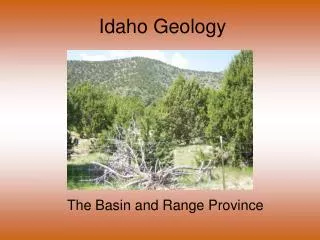
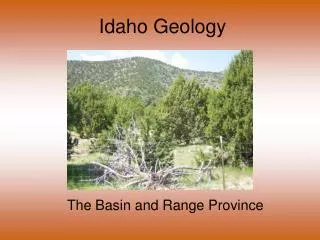
Idaho Geology The Basin and Range Province
This region consists of high valleys/basins separated by ranges of mountains (basins are the dominant landform), hence the name – Basin and Range Province
The BRP is part of the Great Basin of the Western U.S., which is also a much larger basin and range formation
Mountain Ranges Most peaks are 7-10,000 feet in elevation Albion Mts. Sublett Mts. Deep Creek Mts. Bannock Mts.
Mt. Independence – 10,550 ft.Cache Peak – 10,340 ft.(Albion Mountains) *Mt. Independence *Cache Peak
Rivers of the Region Snake River Bannock Creek Raft River Goose Creek These 4 are part of the Snake River system
The Bear River also drains this region, flowing in a U-shaped course (around Bear Lake) from Utah, through the Middle Rockies, skirting the BRP, turning south to the Great Basin of Utah, and finally emptying into the Great Salt Lake Bear River >
Basin and Range • A series of relatively parallel fault lines • Results in fault block mountains far enough apart that wide basins exist between them • Broad valleys/basins fill in from massive deposits from the neighboring ranges
Climate • Extreme and dry (rainshadow?) • Summer highs average 88 degrees • Winter lows about 12 degrees • 10-40 inches of precipitation per year depending upon elevation • Most falls at higher elevations and most of that is snow • Basins have rivers
Curlew National Grasslands set aside as a way to save the beauty of these grassland environs