Understanding Sexual Harassment: Essential Training for Employees
230 likes | 389 Vues
This training session equips employees with vital knowledge regarding sexual harassment in the workplace. Participants will learn to recognize various forms of harassment, understand workplace policies, and report incidents effectively. With insights into the legal framework surrounding harassment, its impact on workplace dynamics, and common examples, this session aims to foster a respectful and productive work environment. Join us to empower yourself and uphold the rights of all employees, ensuring a safe space for everyone.


Understanding Sexual Harassment: Essential Training for Employees
E N D
Presentation Transcript
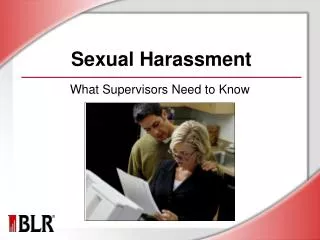
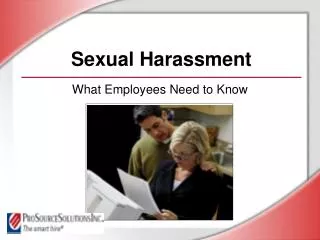
Sexual Harassment What Employees Need to Know
Session Objectives • You will be able to: • Recognize sexual harassment • Differentiate between the two main kinds of harassment • Understand and follow workplace policy • Report incidents and cooperate in investigations • Help promote and maintain a comfortable, productive work environment
Session Outline • Why it’s important for you to know about sexual harassment • Laws that prohibit sexual harassment in the workplace • What constitutes sexual harassment • Who is affected by it • What to do about it • How to prevent it
About 70% of women and 20% of men have experienced sexual harassment About 15,000 sexual harassment cases are filed each year Charges of sexual harassment cost U.S. companies almost $40 million each year Complaints filed by men have more than tripled in recent years How Widespread Is Sexual Harassment?
Economic Harassment or Hostile Work Environment? • An employee is asked to talk about her raise with her supervisor after business hours at a romantic restaurant. • An employee brings a sexually explicit gag gift into work for a co-worker’s birthday present. • This is economic harassment. • This describes a hostile work environment.
Economic Harassment or Hostile Work Environment?(cont.) • A supervisor regularly uses obscene language when talking to his employees. • An employee who appears to be “very close” to the boss always gets the easiest job assignments. • This describes a hostile work environment. • This is economic harassment.
Why You Need to Know • We all have the right to fair treatment at work • Sexual harassment harms everyone • It undermines the trust and respect necessary for a productive work environment • Men and women on every level may be harassers or victims
Harassment and the Law • Title VII • The courts • State law • Equal Employment Opportunity Commission (EEOC)
Harassment and the Law (cont.) • EEOC defines sexual harassment as sexual conduct that is: • Unwelcome • Harmful • Illegal
Is this Sexual Harassment? A female employee wears miniskirts to work. Is thisinviting harassment? A female supervisor makes frequent comments about a male employee’s physique. Is this sexual harassment? A male supervisor makes frequent comments about a male employee’s physique. Is this sexual harassment? NO YES YES
Is this Sexual Harassment? (cont.) Two co-workers forward each other off-color jokes they receive in e-mails. Is this sexual harassment? An employee asks a co-worker out. Is this sexual harassment? Two co-workers develop a personal relationship. Is this sexual harassment? NO NO NO
Is this Sexual Harassment? (cont.) An employee posts a swimsuit calendar in his work area. Is this sexual harassment? An employee posts a male pinup in her work area. Is this sexual harassment? A good customer makes provocative comments to employees. Is this sexual harassment? YES YES YES
Sexual Harassment • Do you understand why it is important to know about sexual harassment? • Do you think you can recognize examples of sexual harassment?
Economic Harassment • Tangible employment action, or economic harassment • Automatic liability • Tangible employment action must actually occur
Hostile Work Environment • Severe or pervasive conduct (or both) • Intimidating, hostile, or offensive displays
Hostile Work Environment (cont.) • Examples include: • Sexually explicit pictures, calendars, graffiti, or objects • Regularly: • Using dirty words • Making sexual jokes • Using obscene gestures • Making rude comments of a sexual nature
Who’s Affected? • Those who commit acts of sexual harassment, including: • Employees at any level • Clients or customers • Members of the same sex
Who’s Affected? (cont.) • Those who experience harassment, including: • Direct targets • Bystanders and witnesses
Sexual Harassment • Do you understand the two main forms of sexual harassment – economic harassment and hostile work environment? • Is it clear who may be affected by sexual harassment in the workplace?
Prevention: What We All Can Do to Help • Provide a clear statement of our position against sexual harassment • Promote compliance and prevention by defining responsibilities • Protect your rights and foster respect for everyone
Prevention: What You Can Do to Help • Know and comply with workplace policy • Address incidents of sexual harassment immediately
Prevention: What You Can Do to Help (cont.) • Support victims • Cooperate with investigations
Sexual harassment is prohibited by law and workplace policy • It involves more than physical conduct; it can also be verbal or visual • Sexual harassment harms us all • You have the power to help prevent it