PRESSURE SYSTEMS AND STORMS
90 likes | 204 Vues
This overview discusses the mechanisms behind high and low pressure systems created by the rising and sinking of warm and cool air, influenced by Earth's rotation. High pressure generally indicates fair weather with clockwise wind circulation, while low pressure is associated with counterclockwise winds that can lead to stormy conditions. We explore the characteristics and formation of different storm types, including thunderstorms, tornadoes, and hurricanes. Learn how these systems cause rapid air movement and lead to severe weather events that impact our environment.


PRESSURE SYSTEMS AND STORMS
E N D
Presentation Transcript
PRESSURE SYSTEMS AND STORMS STD: 6-4.4
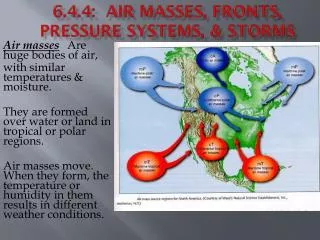
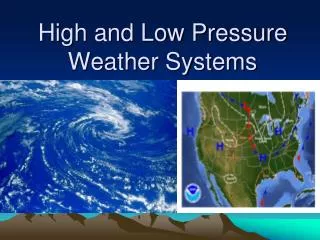
PRESSURE SYSTEMS • High/Low Pressure Systems are created by warm air rising and cool air sinking combined with the spinning of Earth that causes rotation of air masses
PRESSURE SYSTEMS (cont.) • 2 Types • HIGH usually signals fair weather with winds that circulate around the system in a clockwise direction • LOW counterclockwise circulating winds that often result in rainy and/or stormy weather conditions
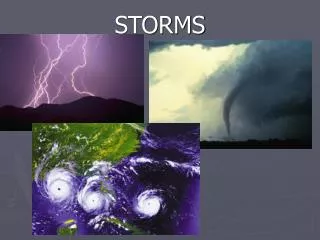
STORMS! • Occur when pressure differences cause rapid air movement • Thunderstorms • Tornado • Hurricane
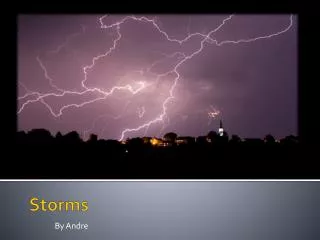
Thunderstorms • A storm with thunder, lightning, heavy rains and strong winds • Usually forms along a cold front but can form within an air mass • Forms within large cumulonimbus clouds
Tornado • Rapidly whirling, funnel shaped cloud that reaches down from a storm cloud • Area of low pressure • Strong winds • Likely to form within the frontal regions where strong thunderstorms are also present
Hurricane • Low pressure tropical storm that forms over water • “eye” of the storm Winds that are spinning in a circular pattern around the center of the storm • Lower the air pressure at the center, the faster the winds blow toward the center of the storm