Acids and Bases
Explore the fundamental properties of acids and bases, including their behaviors in water, taste characteristics, and reactions. Acids produce hydrogen ions (H+) and have a sour taste, negatively impacting metals and changing blue litmus paper to red. In contrast, bases produce hydroxyl ions (OH-) and have a bitter, soapy feel, turning red litmus paper blue. Common examples like acetic acid (vinegar), hydrochloric acid (stomach acid), and household bases such as bleach and antacids are discussed. Learn about pH levels, neutralization reactions, and the role of pH indicators.

Acids and Bases
E N D
Presentation Transcript
Properties of Acids • Produce H+ (hydrogen) ions in water • Taste sour • Corrode metals • React with bases to form a salt and water • pH is less than 7 • Turns blue litmus paper to red “Blue to Red A-CID”
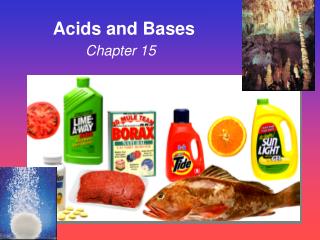
Examples of Common Acids Acetic acid (vinegar) Ascorbic acid (lemon juice) Why the symbol for soda? Hydrochloric acid (stomach acid)
Properties of Bases • Produce OH- ions in water (hydroxyl ions) • Taste bitter, chalky • Are electrolytes • Feel soapy, slippery • pH greater than 7 • Turns red litmus paper to blue “Basic Blue”
Properties of Bases • Many household products contain bases • Strong bases can be dangerous
Properties of Bases • Bases can help to ease the effects of too much stomach acid • They are conveniently called ANTACIDS
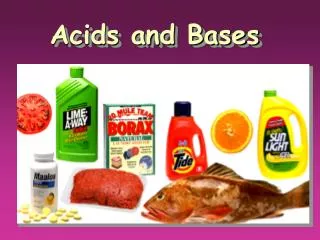
Examples of Common Bases • Bleach • Laundry detergent • Shampoo • Soaps, toothpaste • Tums, Alka-Seltzer (antacids)
Water - an acid or base? Water is neither acidic or basic – it is the only substance that is naturally neutral. pH = 7 (neutral)
Litmus Paper • A base will turn litmus blue • An acid will turn litmus red
Acid-Base Reactions A reaction between an acid and a base is called a neutralization
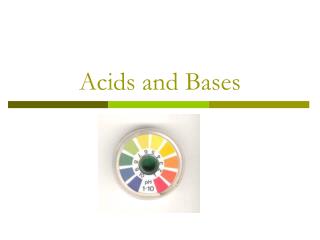
The pH scale is a way of expressing the strength of acids and bases. pH 1-6 = acidpH 7 = neutralpH 8-14 = base
pH Scale • A pH lower than 7 is acidic • A pH higher than 7 is basic (alkaline) • If the pH is 7, the solution is neutral
pH indicators Indicators are dyes that can be added that will change color in the presence of an acid or base.