Understanding the Doppler Effect: How Movement Affects Wave Frequencies
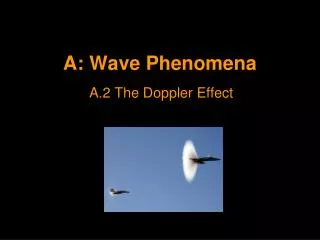
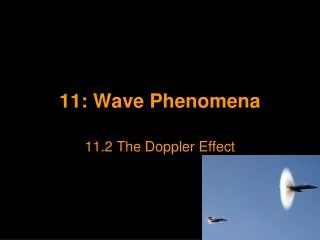
The Doppler Effect describes the apparent change in frequency of waves as the source or observer is in motion. When the source and observer move closer together, the observer perceives an increased frequency (higher pitch for sound, blue shift for light). Conversely, when they move apart, the observer experiences a decreased frequency (lower pitch for sound, red shift for light). This phenomenon can be observed in everyday scenarios, such as the sound of a passing police car. Learn how frequency relates to pitch and color through this fundamental wave phenomenon.

Understanding the Doppler Effect: How Movement Affects Wave Frequencies
E N D
Presentation Transcript
Wave Phenomena Doppler Effect
Doppler Effect • Apparent change in frequency as a result of the source or observer moving • The frequency of the source does not change *Frequency is related to - pitch for sound (how high or low it is) - color for light
Doppler Effect Occurs when the source, observer or both are moving Source and observer move closer together • Source notices higher frequency Source and observer move away from each other • Source notices lower frequency
t= 1 s t= 2 s t= 3 s Experiences higher frequency than source Experiences lower frequency than source
Police Car • Point
Doppler Effect Observer and source move closer together • Wave fronts bunch up • Increased frequency • Sound – higher pitch • Light – color shifts toward blue • Decreased wavelength Observer and source away from each other • Wave fronts spread apart • Decreased frequency • Sound – lower pitch • Light – color shifts toward red (Red Shift) • Increased wavelength