Inorganic Finishing Processes: Coatings and Surface Conversion Techniques
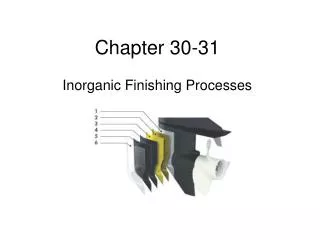
This chapter covers a range of inorganic finishing processes to enhance surface properties, including black oxide treatment, chemical cleaning methods, and various coating techniques. It details mechanical and chemical surface preparations, such as abrasive cleaning, tumbling, media blasting, and electropolishing. The chapter explains different types of coatings, including phosphate conversion, chromate layers, anodizing, and electroplating, with specific applications across metals and ceramics. It also highlights the benefits of these coatings, such as improved wear resistance and aesthetic finishes.

Inorganic Finishing Processes: Coatings and Surface Conversion Techniques
E N D
Presentation Transcript
Chapter 30-31 Inorganic Finishing Processes
Converted Surfaces and Coatings http://www.duncanamps.co.uk/metal/black_oxide.php
Surface Prep • Mechanical • Abrasive cleaning • Tumbling & Vibrating • Media Blasting • Burnishing • Brushing • Chemical • Pickling (in acid) • Alkaline Cleaning • Vapor degreasing • Electrochemical • Electropolishing • (the part is the anode)
Combinations of Inorganic Coatings on Base Materials • Metal on metal • Metal on plastic • Ceramic on ceramic • Ceramic on metal
Phosphate Conversion Coatings • Creates a phosphate layer on the surface • Requires part to be clean first • Provides a base for painting, oiling, or waxing surface • Reduces friction (e.g., for processing)
Chromate Coatings • Used on Aluminum, Zinc, Cadmium coated steel. Also used on Mg and Sn coated steel. • Provides a decorative appearance • Used as a base coat for paint • May contain a dye to color the converted coating zinc chromate (silver) zinc dichromate (gold)
Oxide Coatings • Immersion of parts in hot caustic soda and nitrite or nitrate solution
Anodic Conversion Coatings • Anodizing • Used on Al and Mg • Creates a protective oxide coating
Metallic Coating Finishing • Electroplating • Electroless and Immersion Plating • Dipping • Metalizing • Diffusion Coatings
Electroplating • Provides attractive surface finish • Improves wear resistance • Increase thermal conductivity • Improve materials ability to be soldered • Build up worn areas
Electroless Plating • Metal is deposited by chemical means • Used to deposit nickel, gold, tin, copper, cobalt and zinc to • Copper, aluminum, steel and plastic
Dipping • Base metal is cleaned • Dipped in flux • Molten metal bath • Excess metal drips off
Metallizing • Wire Metallizing or flame spraying • Plasma-arc spraying • Vacuum metalizing
Vacuum Metallizing • Vaporized coating material using tungsten filaments • Vaporized metal floats in the vacuum and deposits on rotating parts • Used to coat automotive trim, reflectors, hardware, jewelry, etc. • Deposits high purity metal
Ceramic Coating Finishes • Porcelain Enamels • Glasslike material bonded to base metal • Fired from 1-2000 deg. F. • Durable, scratch resistant, easy to clean, resists chemicals and heat • Glazes • Glasslike material applied to ceramic material • Refractory Ceramic Coatings • High heat resistance