Download
1 / 9
90 likes | 216 Vues
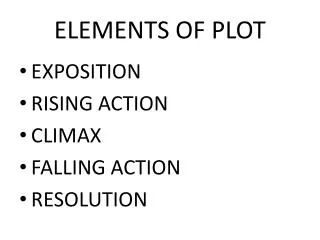
Explore the fundamental stages of plot in classical storytelling: Exposition, Complication, Climax, and Resolution. Each stage serves a crucial role in narrative structure. The Exposition introduces the main characters and setting while exposing the conflict. The Complication details the characters’ efforts to resolve the challenges they face. The Climax presents the turning point where conflicts are addressed. Finally, the Resolution reveals the outcomes for the characters, wrapping up the story. This structure is essential for effective storytelling.

E N D
Stages of Plot Classical Story Map
Stage 1 EXPOSITION
EXPOSITION • THIS IS THE BEGINNING OF THE STORY. • MAIN CHARACTER(S) ARE IDENTIFIED • SETTING DESCRIBED • CONFLICT IS EXPOSED
STAGE 2 COMPLICATION
COMPLICATION • THIS IS THE MIDDLE OF THE STORY WHERE THE MAIN CHARACTER(S) IS/ARE TRYING TO SOLVE THE PROBLEM. • WHAT SPECIFICALLY IS/ARE THE MAIN CHARACTER(S) DOING TO TRY TO SOLVE THE PROBLEM? • THERE ARE USUALLY AT LEAST TWO OR MORE THINGS THE MAIN CHARACTER(S) DO IN ORDER TO SOLVE HIS/HER/THEIR PROBLEM DEPENDING ON HOW LONG THE STORY IS.
STAGE 3 CLIMAX
CLIMAX • THIS IS THE PART IN THE STORY NEAR THE END WHERE THE PROBLEM IS SOLVED. • WHAT HAPPENED IN THE STORY WHERE THE MAIN CHARACTER(S) FIXED THE PROBLEM? • THIS MUST MATCH OR RELATE TO THE CONFLICT.
STAGE 4 RESOLUTION
RESOLUTION • THIS IS THE END OF THE STORY. • WHAT HAPPENED TO THE MAIN CHARACTER(S) AT THE END OF THE STORY?