SlideServe
Menu
Préférences
© SlideServe · v2026

Understanding the Elements of Plot: Structure and Key Components of Storytelling

kezia avatar
30 diapositives · 465 Views · Aug 04, 2014

This guide explores the essential elements of plot in storytelling. It covers the definition of plot and its significance in answering the pivotal question: "What happened?" Key components include exposition, characters, conflicts, sequence of events, climax, resolution, and theme. The protagonist and antagonist are defined, along with the types of conflict—internal and external. Additionally, we discuss narrative perspectives and the author's purpose, emphasizing entertainment as the primary goal in fiction. Understand storytelling's framework to enhance your writing and analysis skills.
Understanding the Elements of Plot: Structure and Key Components of Storytelling - slide 1
01 / 30Understanding the Elements of Plot: Structure and Key Components of Storytelling
1 / 17

Télécharger la présentation

Understanding the Elements of Plot: Structure and Key Components of Storytelling
Une image / un lien ci-dessous est fourni (tel quel) pour télécharger la présentation

Politique de téléchargement : le contenu du site vous est fourni TEL QUEL pour votre information et votre usage personnel ; il ne peut être vendu, concédé sous licence ni partagé sur d’autres sites sans l’accord de son auteur.Le contenu vous est fourni TEL QUEL, pour votre information et votre usage personnel uniquement. Téléchargez la présentation en cliquant sur ce lien. Lors du téléchargement, si vous ne parvenez pas à télécharger une présentation, l’éditeur a peut-être supprimé le fichier de son serveur.Pendant le téléchargement, si vous ne parvenez pas à obtenir une présentation, le fichier a peut-être été supprimé par l’éditeur.

F I N

Plus de contenu associé

Transcription de la présentation
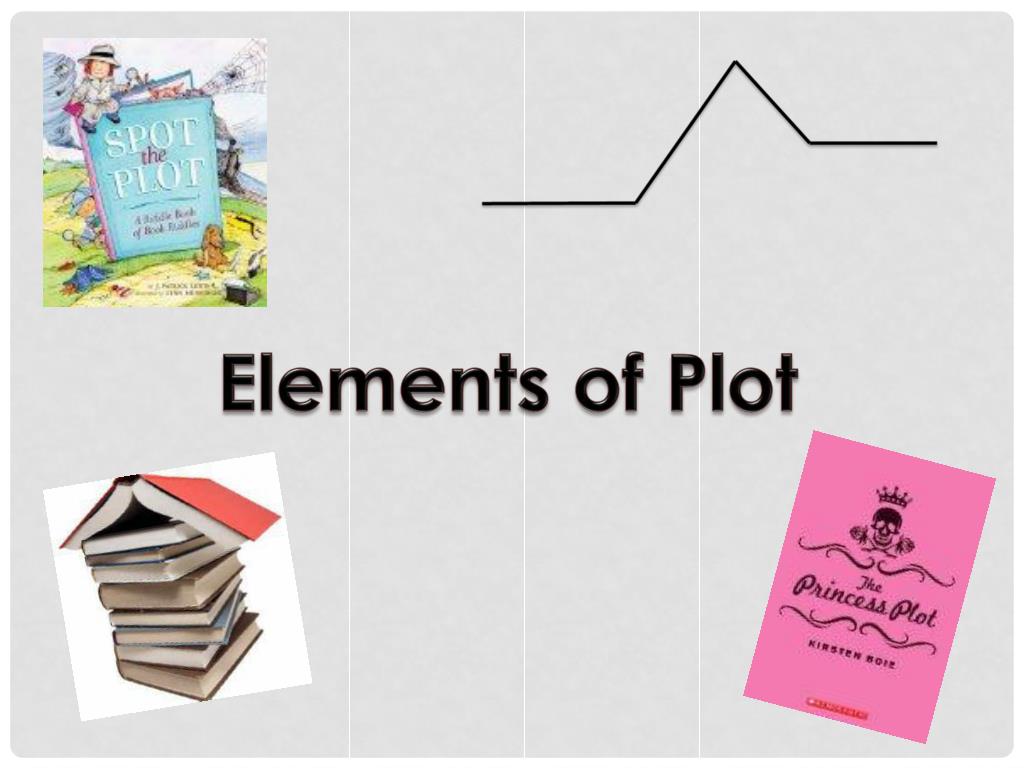
  1. Elements of Plot

  2. Plot Plot: the series of events in a story; answers the question, “What happened?” Plot Diagram It’s everything!!!

  3. Exposition • In the beginning…

  4. Exposition Sets up the story and introduces the following: • Setting • Characters • Conflict

  5. Characters

  6. Protagonist The protagonist is the central (main) character. The Good Guy!!!

  7. Antagonist • The antagonist is usually the other main character and the opposing force. The Bad Guy!!!

  8. Conflict • the story’s problem or dilemma • can be internal (within a person) or external (an outside force) • four types of conflict

  9. Person vs. Person Protagonist vs. Antagonist (External)

  10. Person vs. Environment Protagonist vs. Nature/Elements (External)

  11. Person vs. Technology Protagonist vs. Machines (External)

  12. Person vs. Self Protagonist vs. Him/Herself (Internal)

  13. Sequence of Events (It’s part of the plot!)

  14. Sequence of Events • Also called the rising action • The order in which events occur • Usually starts after the conflict is identified • May only be a few events, or may be many

  15. Climax

  16. Climax • most exciting moment of the story • most likely find out how the story is going to end • The last event that turns the story around before the resolution

  17. Resolution

  18. Resolution/Conclusion • The ending of the story • The final part of the plot • Problems are solved one way or another and the story ends

  19. Theme

  20. Theme • The theme is the lesson or moral of the story. • To find the theme, look at the conflict. • How did they problem arise? The theme is usually rooted there!

  21. Cheaters never win Be kind to others Honesty is the best policy Things aren’t as they appear Be careful what you wish for The grass isn’t always greener on the other side

  22. Point of View

  23. Point of View (POV) • the way the author allows you to "see" and "hear" what's going onin the story. • There are three types: • First Person • Third Person Limited • Third Person Omniscient

  24. First Person POV • The narrator is a character in the story. • He/She can reveal only: • personal thoughts and feelings • what he or she sees • what is told by other characters. The narrator can’t tell us thoughts of other characters. • Words to look for: I, Me, My, and Mine

  25. Third Person Limited • The narrator is an outsider who can report only what he or she sees and hears. • The narrator can tell us what is happening, but he can’t tell us the thoughts of the characters.

  26. Third Person Omniscient • All seeing and all knowing • The narrator is an outsider who sees into the minds of all the characters.

  27. Author’s Purpose

  28. All fiction is meant to entertain!!!!!!!

  29. Really, it’s over!