The Medieval World
This overview explores the Medieval World, highlighting its social structure divided into three classes: Clergy, Nobility, and Peasantry, where one's position was determined by birth. The political system of Feudalism provided security, political organization, and law enforcement, while the economic framework of Manorialism rested on agriculture, with lands divided into self-sufficient manors. The unifying force of Roman Catholicism as the Church acted as the intermediary between God and man, emphasizing the importance of sacraments for salvation and focusing on the afterlife.

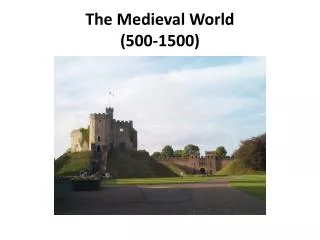
The Medieval World
E N D
Presentation Transcript
The Medieval World An Overview
Social Structure • Three social classes: • Clergy • Nobility • Peasantry • Position depended upon birth.
Political System: Feudalism • Feudalism offered: • Security • Political organization • Law enforcement • Justice
Economic System: Manorialism • Agriculture was the basis for wealth. • Lands were divided into self-sufficient manors. • Barter was the usual form of exchange.
Religious Life: Unity • Roman Catholicism • Church was the intermediary between God and man • Sacraments (dispensed by a priest) were necessary for salvation • Emphasis was on the afterlife