Download
1 / 12
130 likes | 284 Vues
The Allied occupation of Japan from August 1945 to April 1952, led by General MacArthur, transformed the nation. Japan lost territories gained since 1894, and war crimes led to the suicide of over 500 military officers. A new constitution in 1947 stripped the emperor of political power, establishing universal suffrage and human rights. Japan was prohibited from waging war or maintaining an army. The 1973 oil crisis prompted a shift to high-tech industries, and today, Japan stands as the third-largest economy, blending East and West influences across culture, technology, and cuisine.

E N D
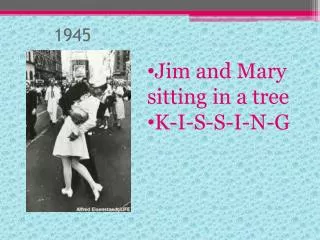
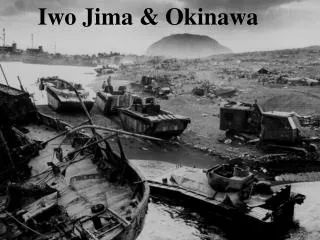
Post WWII • The occupation of Japan by the Allied Powers started in August 1945 and ended in April 1952. General MacArthur was its first Supreme Commander.
Effects of WWII on Japan • Japan basically lost all the territory acquired after 1894 • The remains of Japan's war machine were destroyed, and war crime trials were held. Over 500 military officers committed suicide right after Japan surrendered
A new constitution went into effect in 1947 The emperor lost all political and military power, and was solely made the symbol of the state. Universal suffrage was introduced and human rights were guaranteed. Japan was also forbidden to ever lead a war again or to maintain an army
Break up power concentrations by dissolving the zaibatsu and other large companies, and by decentralizing the education system and the police
The 1973 oil crisis shocked the Japanese economy which was heavily depended on oil. The reaction was a shift to high technology industries
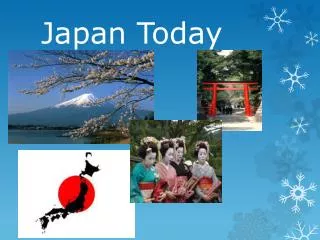
Japan Today • 3rd Largest Economy in the World • Blend of cultures- East and West