Human Endocrine System
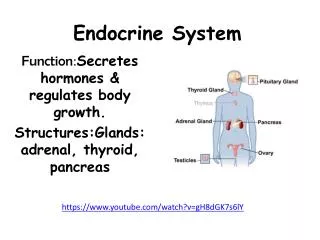
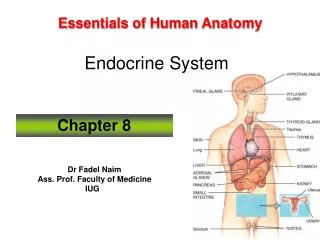
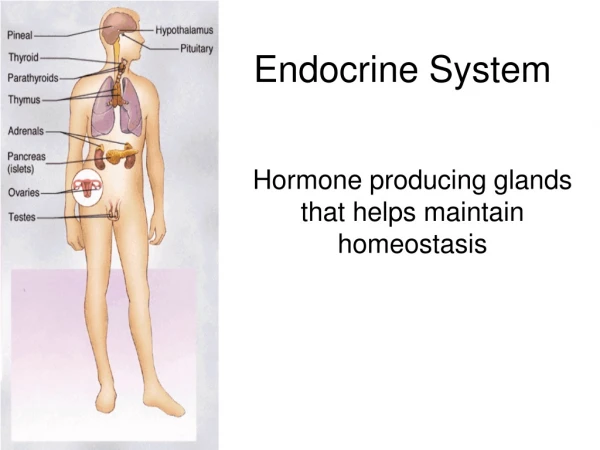
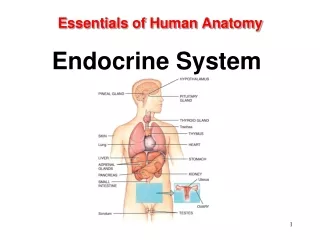
The human endocrine system is a complex network of glands that release hormones, which act as chemical messengers traveling through the body to target specific cells or organs. Hormone release is primarily controlled by feedback mechanisms, including negative feedback, hormonal stimuli, humoral stimuli, and neural stimuli. Key glands include the pituitary gland, thyroid, adrenal glands, pancreas, pineal gland, thymus, and gonads, each producing hormones crucial for growth, metabolism, reproduction, and maintaining homeostasis.

Human Endocrine System
E N D
Presentation Transcript
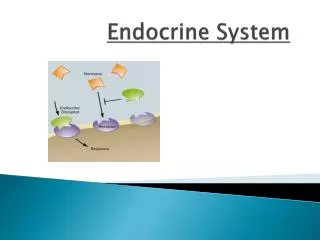
Endocrine Overview • Hormones- chemical messengers travel through body • Target cell or organ- organ or cells that a hormone affects
Control of Hormone Release • Negative feedback mechanism- hormone release is triggered by stimulus, rising levels of hormone inhibit further release • Endocrine stimuli- • Hormonal- hormones stimulate the release of others • Humoral- blood stimulates release of hormones • Neural- nerves stimulate hormone release
Anterior Pituitary Gland • Growth Hormone (GH)- affects growth of skeletal muscles and bones • Prolactin (PRL)- stimulates milk production after pregnancy • Gonadotropic- regulates hormone activity of sex organs • Also effects adrenal cortex and thyroid hormone release
Posterior Pituitary • Oxytocin- helps during pregnancy • Antidiuretic hormone (ADH)- inhibits urine production • Alcohol inhibits ADH causing increased output of urine
Thyroid Gland • Thyroid hormone • Controls the rate at which glucose is “burned” • Calcitonin • Decreases calcium levels in blood deposits on bone
Parathyroid Gland • Parathyroid hormone (PTH)- regulates Ca2+ in blood • If Ca2+ level drops bones is broken down
Adrenal Gland • Adrenal Cortex • Releases hormones that regulate mineral content in blood • Adrenal Medulla • Produces epinephrine and norepinephrine • Helps with stressful situations
Pancreas • Insulin- increases glucose uptake into cells and stores in liver • Glucagon- stimulates breakdown of glucose stores in the liver
Pineal Gland • Melatonin • Establishes body’s day/ night cycle
Thymus • Thymosin • “Programs” T cells
Gonads • Androgens (male)- sperm formation, development of male char • Estrogens (female)- development of female char