Digestive System
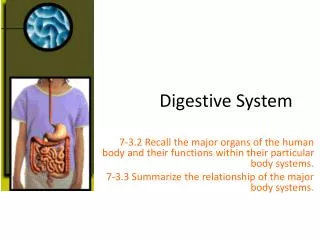
The digestive system is an intricate process that involves both physical and chemical changes as food travels from the mouth to the rectum. In the mouth, teeth and tongue tear food while saliva starts breaking down starches. The esophagus quickly pushes food to the stomach with a wave-like motion called peristalsis. In the stomach, food is churned and soaked in acid for germ elimination. The small intestine is where final digestion occurs, aided by bile and digestive juices. Finally, solid waste is formed in the large intestine and expelled from the body.

Digestive System
E N D
Presentation Transcript
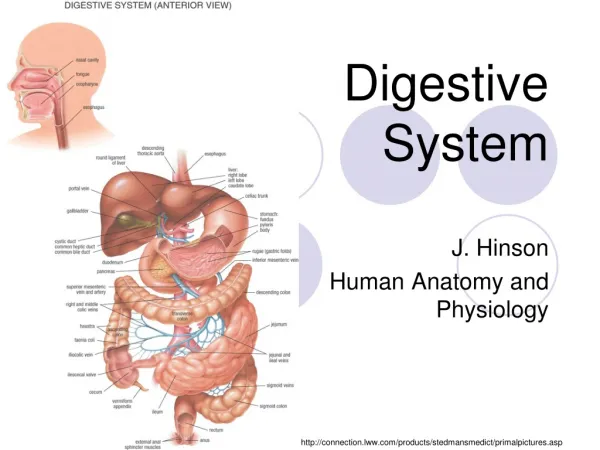
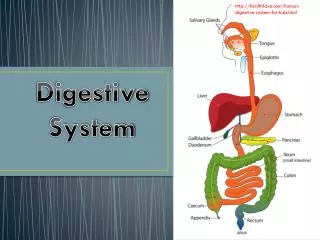
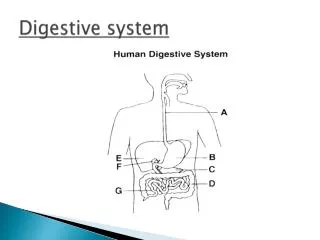
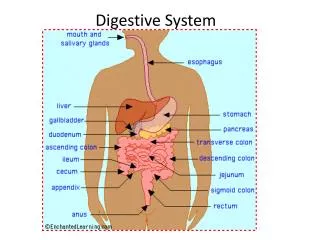
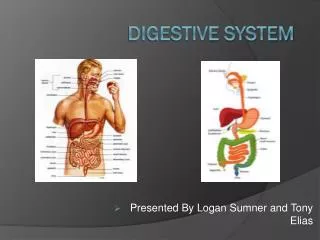
Mouth Physical Changes • Teeth and tongue start tearing the food into smaller pieces. Chemical Changes • Saliva, from the salivary glands, moistens the food and begins the digestion of starch into sugar.
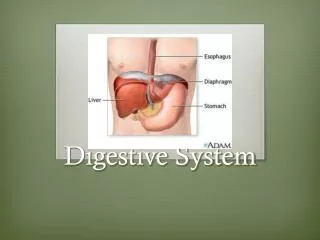
Esophagus Physical Changes • Muscular tube that can push the food into the stomach in 7 seconds. The squeezing motion is called peristalsis, and looks like an ocean wave passing through the system. Chemical Changes: NONE
Stomach Physical Changes Muscles in the stomach contract and churn the food. The stomach is coated with mucus to protect it from digestive juices. Food stays here 3-4 hours. It leaves here in a thick liquefied state Chemical Changes An acid soaks the food. The hydrochloric acid kills germs in the food as well as helping to dissolve it.
Small Intestine Physical Changes • A 6.1 m (20 ft) tube where final digestion and absorption occurs. There are millions of small fingerlike projections called villi. Peristalsis pushes food through the intestine. Food can remain here for up to 8 hours Chemical Changes • Digestive juices from the liver and pancreas break down fats, proteins, and starch. The liver makes bile, stores it in the gallbladder and releases it into the small intestine. Bile breaks down fats.
Large Intestine Physical Changes A 1.5 m (5 ft) tube where non-useful parts of food end up. The solid material left behind (feces) is moved by peristalsis to the rectum. Chemical Changes •Water is absorbed into the body here. As water is removed from the waste material, the waste becomes more solid
Rectum Physical Changes • The mostly solid feces are expelled from the body through the anus during a bowel movement. The waste may stay here 1–2 days. Chemical Changes NONE