Download
1 / 9
100 likes | 229 Vues
The post-WWII power struggle influenced the emergence of NATO and the Warsaw Pact as key military alliances. The Soviet Union, unwilling to relinquish control of Eastern Europe, aimed to solidify communist power, fearing capitalist influence. In response, the USA implemented the Truman Doctrine and the Marshall Plan to support countries resisting communism. The Cold War escalated with the arms race, as both alliances prepared for potential conflict, reflecting deep ideological divides and the commitment to mutual defense among their members.

E N D
Soviet Union USA Not willing to give up power gained during WWII Believed that liberated countries of Eastern Europe should determine own government • Feared capitalist West • Refused to give up control of Eastern Europe after WWII • Feared freed Eastern European countries would not choose communism • Stayed in areas they conquered during WWII Development of Cold War
Truman Doctrine • 1947 • “it must be the policy of the United States to support free peoples who are resisting attempted subjugation by armed minorities or by outside pressures.” • Greece & Turkey
1947 Gen. George Marshall believed communism was successful in countries with economic problems Rebuild Europe COMECON Policy of Containment Marshall Plan
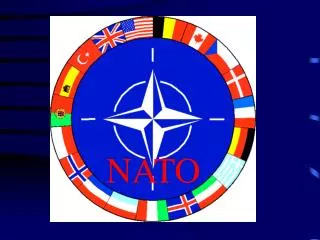
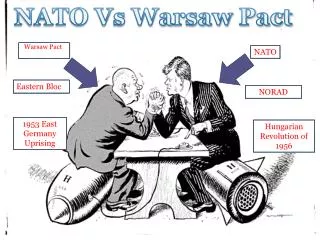
North Atlantic Treaty Organization 1949 Belgium, Luxembourg, France, Netherlands, Great Britain, Italy, Denmark, Norway, Portugal, Iceland, Canada, United States Provide mutual help if anyone on them attacked NATO
West Germany, Turkey, Greece, Join later
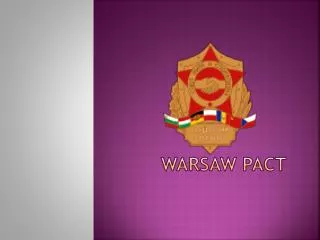
1955 Albania, Bulgaria, Czechoslovakia, East Germany, Hungary, Poland, Romania, & Soviet Union, Warsaw Pact
Both sides believed large arsenals would prevent war Arms Race