Download
1 / 7
70 likes | 197 Vues
Why we need a Biodiversity Image Archiving System. Arthur D. Chapman Australian Biodiversity Information Services. Images and Biodiversity Informatics. Increase in high quality digital images Increase availability of images Havesting Tools Creative Commons Licensing

E N D
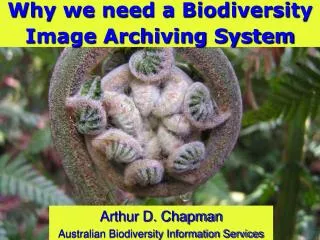
Why we need a Biodiversity Image Archiving System Arthur D. Chapman Australian Biodiversity Information Services
Images and Biodiversity Informatics • Increase in high quality digital images • Increase availability of images • Havesting Tools • Creative Commons Licensing • Availability of tools for tagging and harvesting • Availability of identification services • Active Citizen Scientist community wanting to contribute • Projects wanting to use available images • Images contain valuable information • Identification • locational
Flickr • Internet tool for images • Includes millions of Biodiversity Images • ‘Flickr Groups’ make grouping a breeze • EOL Group • Field Guide to Insects of Australia • Many images are tagged with Machine Tags • Used by EOL, Wikipedia, ALA etc. • Images are an essential part of projects such as • Encyclopedia of Life • Atlas of Living Australia • Wikipedia in its various forms
Long-term resource • These images are (or can be) a valuable long-term biodiversity resource • But what happens to the images if the Flickr account ceases through death, financial hardship, lack of interest, etc.? • In my case – I’d like my images to be available long after my death – so how can we achieve that? • For these images to be truly valuable long-term we need a biological image archive
A Biological Image Archive • Who could run such an Archive? • Single or multiple archives? • Global projects? e.g. • Biodiversity Heritage Library • Encyclopedia of Life • Global Biodiversity Information Facility • Morphbank • iDigBio • Other Cloud options • National projects? • Atlas of Living Australia • Combinations of one or more • Should it be a free service or charged? • It would require voluntary opt-in/opt-out
Conclusion • These are largely questions without answers at this time • So where to from here? • I suggest a TDWG sponsored white paper to • Examine the issues • The extent of the problem • Include a user needs analysis? • Questionnaire • Image suppliers • Image users • Archiving organisations • Propose a set of Options • Perhaps this could be included into the newly-formed Citizen Science Interest Group’s charter?