Vocabulary and Insights from Act III of Julius Caesar for Geller’s So-So Sophomores
80 likes | 207 Vues
Explore key vocabulary and thematic elements from Act III of Shakespeare's "Julius Caesar." This resource focuses on important terms such as "purge," "testament," and "havoc," essential for understanding the unfolding drama. As Brutus grapples with his conspiratorial choices and the looming consequences of betrayal on the Ides of March, the characters' motivations and legacies come into sharp focus. Prepare your students to engage deeply with the text while expanding their vocabulary in this pivotal act of the play.


Vocabulary and Insights from Act III of Julius Caesar for Geller’s So-So Sophomores
E N D
Presentation Transcript
Julius Caesar: Act III Vocabulary and Introduction Geller’s So-So Sophomores Fall 2013
Vocabulary • Purge (v): Eliminate • Testament (n): Will • Havoc (n): Chaos • Legacy (n): What is left behind after someone is gone • Apparition (n): Ghost • Redress (v): Make up for a wrongdoing • Bestow (v): Give • Devise (v): Figure out; come up with • Ingratitude (n): Ungratefulness; lack of appreciation
More Vocabulary • Counsel (v): To give advice • Extenuating (adj): Lessening the severity of something; making something less serious or severe; mitigating • Spectacle (n): Something dazzling to behold; an amazing sight to see • Mutiny (n/v): Organized revolt against authority • Valiant (adj): Brave • Firmament (n): The sky, the heavens • Conceit (n): arrogance
Even More Vocabulary • Ascend (v): To climb; to go up • Vanquish (v): Conquer; overthrow • Repeal (v): To take back • Censure (v): punish
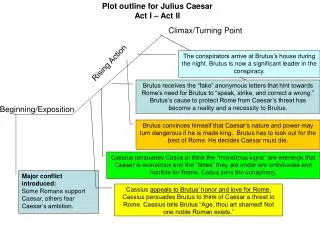
Where We Left Off… • Brutus has committed himself to joining the conspiracy, but convinces the other conspirators that Mark Antony should be allowed to live • Brutus has promised Portia that he will share his secret with her • Calphurnia has failed to convince Caesar to stay home on the Ides of March • Artemidorus plans to warn Caesar about the conspiracy • The conspirators have arrived to escort Caesar to the Capitol
As Act III begins… • Time and place: The Capitol in Rome. The Ides of March. Cast: