
Microbial Biotechnology
E N D
Presentation Transcript
Microbial Biotechnology Chapter 5
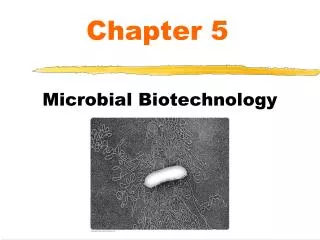
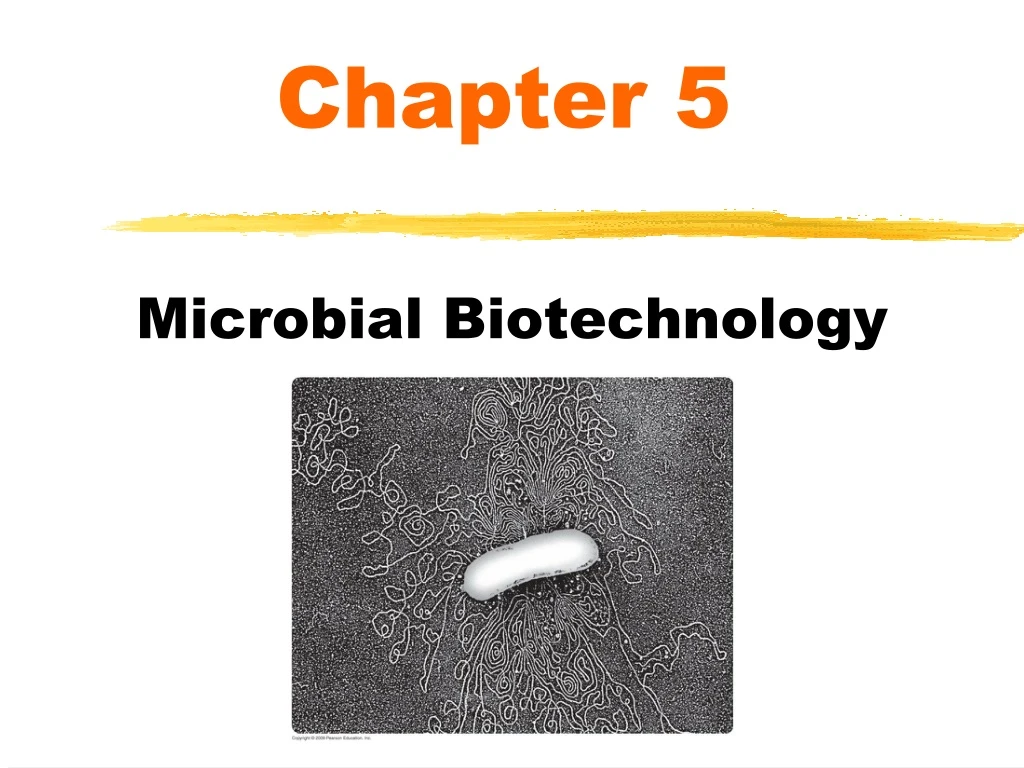
The Structure of Microbes • Prokaryotes • Archaebacteria • Includes halophiles, thermophiles, “extremophiles” • Eubacteria • On skin, soil, water, can be pathogenic
The Structure of Microbes • Characteristics of Prokaryotes • Generally smaller than Eukaryotes • No nucleus • Cell wall composed of peptidoglycan • Conjugation (transfer of DNA by cytoplasmic bridge) • Transduction (DNA is packaged in a virus and infects recipient bacterial cells) • 20 minute growth rate (binary fission)
Yeast are Important Too! • Single celled eukaryote • Kingdom: Fungi • Over 1.5 million species • Source of antibiotics, blood cholesterol lowering drugs • Able to do post translational modifications • Grow anaerobic or aerobic • Examples: Pichia pastoris (grows to a higher density than most laboratory strains), has a no. of strong promoters, can be used in batch processes
Microorganisms as Tools • Microbial Enzymes • Taq (DNA polymerase), cellulases, proteases, amylases
Microorganisms as Tools • Bacterial Transformation • The ability of bacteria to take in DNA from their surrounding environment • Bacteria must be made competent to take up DNA
Microorganisms as Tools • Cloning and Expression Techniques • Fusion Proteins
Microorganisms as Tools • Microbial Proteins as Reporters • Examples: the lux gene which produces luciferase • Used to develop a fluorescent bioassay to test for TB
Microorganisms as Tools • Yeast Two-Hybrid System • Used to study protein interactions
Using Microbes for a Variety of Everyday Applications • Food Products • Rennin used to make curds (solid) and whey in production of cheese • Recombinant rennin is known as chymosin (first recombinant food ingredient approved by FDA)
Using Microbes for a Variety of Everyday Applications • Food Products • Energy production in bacteria • Aerobic or anaerobic
Using Microbes for a Variety of Everyday Applications • Food Products • Fermentation • (anaerobic respiration) • Lactic acid fermentation • Used to make cheese, yogurt, etc. • Ethanol fermentation • Used to make beer and wine
Using Microbes for a Variety of Everyday Applications • Field Applications of Recombinant Microorganisms • Ice-minus bacteria (remove ice protein producing genes from P. syringae) • P. fluorescens containing the gene that codes for the bacterial toxin from Bacillus thuringiensis (kills insects) Bt toxin!
Using Microbes for a Variety of Everyday Applications • Therapeutic proteins • Recombinant insulin in bacteria
Using Microbes for a Variety of Everyday Applications • Using Microbes Against Other Microbes • Antibiotics • Act in a few key ways • Prevent replication • Kill directly • Damage cell wall or prevent its synthesis
Vaccines • First was a vaccine against smallpox (cowpox provides immunity) • DPT-diphtheria, pertussis, and tetanus • MMR –measles, mumps, and rubella • OPV- oral polio vaccine (Sabin)
Vaccines • A Primer on Antibodies • Antigen- foreign substances that stimulate an immune response • Types of leukocytes or white blood cells • B-lymphocytes: antibody-mediated immunity • T-lymphocytes: cellular immunity • Macrophages: “cell eating” (phagocytosis)
Vaccines • Antigens stimulate antibody production in the immune system Light chain Heavy chain IgA – first line of defense IgG and IgM – activates macrophages
Vaccines • Mechanism of Antibody Action
Vaccines • How are vaccines made? • They can be part of a pathogen (e.g. a toxin) or whole organism that is dead or alive but attenuated (doesn’t cause disease) • Subunit (toxin) or another part of the pathogen • Attenuated (doesn’t cause disease) • Inactivated (killed) • What about flu vaccines (why do we have to get a shot every year?)
Recombinant Vaccines • Vaccines – provide immunity to infectious microorganisms Attenuated Vaccine Inactivated Vaccine Subunit Vaccine
Recombinant Vaccines • Recombinant Vaccines • A vaccine produced from a cloned gene Video: Constructing Vaccines
Recombinant Vaccines • DNA vaccines • Direct injection of plasmid DNA containing genes encoding specific antigenic proteins
Microbial Genomes • Microbial Genome Program (MGP) –the goal is to sequence the entire genomes of microorganisms that have potential applications in environmental biology, research, industry, and health • Sequencing Strategies
Microbial Genomes • Why study viral genomes? • Decipher genes and their products so that agents that block attachment, block replication can be made
Microbial Diagnostics • Using Molecular Techniques to Identify Bacteria • RFLP • PCR and Real time PCR • Sequencing
Molecular Diagnostics • Application: Molecular Epidemiology • Pulse Net monitors disease outbreaks related to different strains of food-borne pathogens
Microbial Diagnostics • Microarrays for tracking contagious disease • PulseNet used to identify outbreaks
Microbial Diagnostics • Combating Bioterrorism • The use of biological materials as weapons to harm humans or animals and plants we depend on for food • Examples in History • Throwing plague infected dead bodies over the walls of their enemies
Microbial Diagnostics • Using Biotech Against Bioweapons • Postal service x-raying packages • Antibody tests in the field • PCR tests in the field • Protein Microarrays for detecting bioweapon pathogens