
Risk Assessment

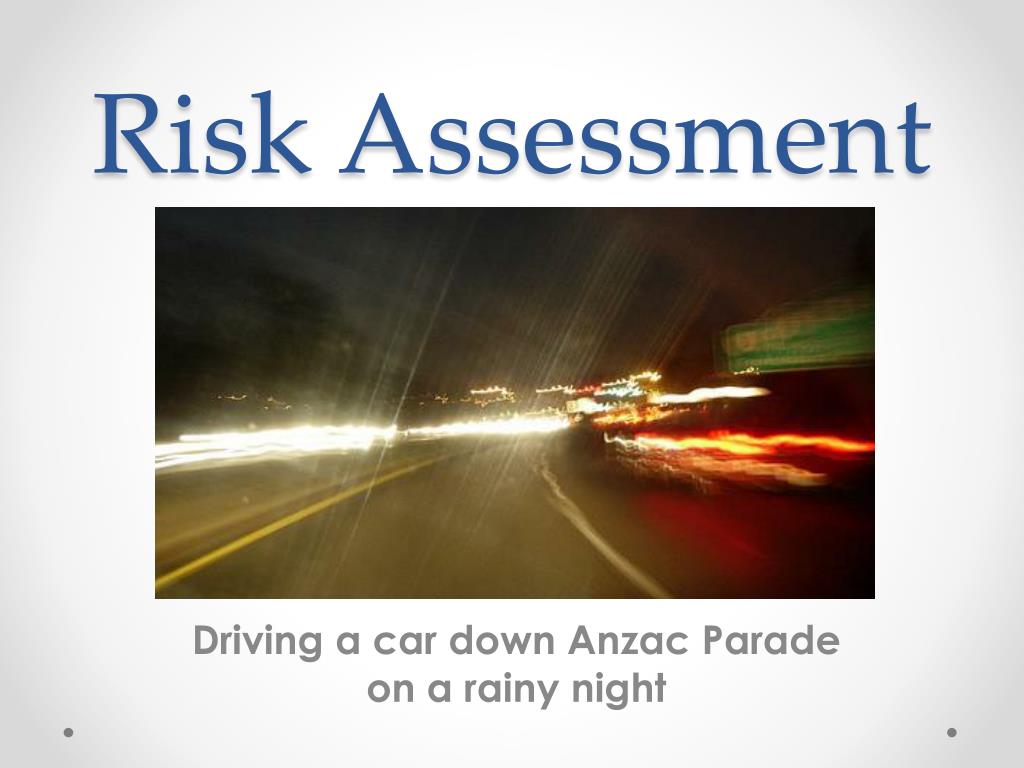
Driving down Anzac Parade on a rainy night presents significant risks due to wet road surfaces, poor visibility, and the presence of other road users. Evaluating the likelihood and consequences, both wet road surfaces and poor visibility have high risk rankings. Current controls include soft and hard barriers, traffic signals, speed cameras, and safety features like seatbelts. Recommended improvements involve signage, public awareness campaigns, increased nighttime lighting, and technology to aid road conditions. Drivers must prioritize the safety of themselves and others by understanding and managing these hazards.
Télécharger la présentation 
Politique de téléchargement : le contenu du site vous est fourni TEL QUEL pour votre information et votre usage personnel ; il ne peut être vendu, concédé sous licence ni partagé sur d’autres sites sans l’accord de son auteur.Le contenu vous est fourni TEL QUEL, pour votre information et votre usage personnel uniquement. Téléchargez la présentation en cliquant sur ce lien. Lors du téléchargement, si vous ne parvenez pas à télécharger une présentation, l’éditeur a peut-être supprimé le fichier de son serveur.Pendant le téléchargement, si vous ne parvenez pas à obtenir une présentation, le fichier a peut-être été supprimé par l’éditeur.
F I N