Understanding Genetic Variation in Sexual and Asexual Reproduction
This article examines the key differences between sexual and asexual reproduction, focusing on how organisms produce offspring. Sexual reproduction involves two parents contributing genetic material, resulting in genetically unique offspring and increased genetic variation through mechanisms like mutation and meiosis. In contrast, asexual reproduction requires only one parent, yielding genetic copies with limited variation. The energy needs and efficiency of both reproduction methods are compared, along with the role of meiosis in generating gametes that preserve chromosome numbers across generations.

Understanding Genetic Variation in Sexual and Asexual Reproduction
E N D
Presentation Transcript
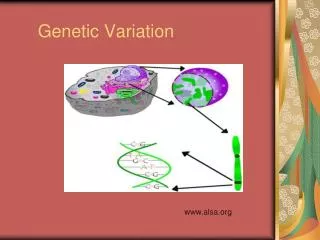
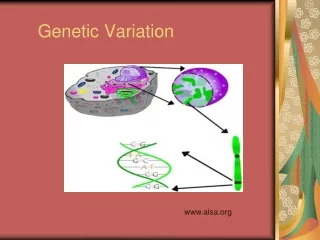
Genetic Variation LHS Biology B
Sexual and Asexual Reproduction • Organisms produce offspring in 2 different ways • Sexual reproduction requires 2 parents • Asexual reproduction only requires 1 parent • Most organisms use one or the other, but some can do both
Sexual Reproduction • 2 parents’ genes combine to form a genetically unique offspring • Genetic variation comes from mutation, meiosis, and random fertilization • Usually takes more energy than asexual reproduction • Most organisms that you are most familiar with use sexual reproduction • Mammals, reptiles, birds, fish, amphibians, and many plants
Asexual Reproduction • 1 parent produces a genetic copy of itself • Genetic Variation comes from mutation only • Usually takes less energy and time than sexual reproduction • Some organisms that can use asexual reproduction are: bacteria, some plants, sea stars, and hydra
Summary Sexual Reproduction Asexual Reproduction • Disadvantages: • Slower • Takes more energy • More complicated • Rare organisms • Major Advantage • Genetic Variation • Disadvantage: • Little genetic variation • Advantages: • Faster • Saves Energy • Less Complicated • Only 1 parent required
What type of reproduction? http://www.youtube.com/watch?v=4JIytOL-Q18 http://www.youtube.com/watch?v=gEwzDydciWc http://www.youtube.com/watch?v=5HMp-GXjHtg
A type of cell division that produces reproductive cells • The cells produced are haploid, but come from a diploid parent cell • Diploid: A cell with 2 sets of chromosomes, one from each parent • Haploid: A cell with only one set of chromosomes Meiosis
Results of Meiosis • Produces 4 haploid cells called gametes • Reproductive cells, sperm, egg • 2 gametes (1 sperm and 1 egg) come together at fertilization, resulting in a zygote • This keeps the chromosome number from changing each generation
Meiosis is different from Mitosis • 2 Divisions: Meiosis I and Meiosis II • Daughter cells are genetically unique • Different from each other and the original cell • Only occurs in certain organs of sexually reproducing organisms
Challenge Question #1 • Is Meiosis happening in your body right now? • Is Mitosis happening in your body right now? • Explain :)
How to Keep them Straight • MiTOsis happens in TOES • Produces identical body cells • MeIosis is why I am unique, why I am ME • Produces unique gametes
Meiosis I • Pairs of chromosomes are divided • One chromosome from each pair goes to each daughter cell • Produces cells with the haploid number of chromosomes • Each daughter cell gets one chromosome from each pair • The pairs split up randomly
Meiosis II • Basically like mitosis • Chromotidsseperate at the centromere like mitosis • Results in 4 haploid daughter cells • 4 functional sperm • 1 functional egg and 3 nonfunctional haploid cells (called polar bodies)
Challenge Question #2 • Explain the purpose of Meiosis in just a few sentences.
Fertilization • Joining of egg and sperm to produce a zygote • Zygote is a diploid cell • Random Fertilization • Any sperm is equally likely to fertilize any egg • Another source of genetic variation
Challenge Question #3 Revised • A human body cell has 23 pairs of chromosomes. How many chromosomes does a human gamete cell have?
Discovery of DNA • DNA is the genetic material that makes up chromosomes • When it is not condensed it is called chromatin • It wasn’t that long ago that we didn’t know about DNA • See timeline on page 292 • World War II lasted from 1939 to 1949 for reference
Image Credits • Bruce the shark: http://sloblogs.thetribunenews.com/sidetracked/files/2009/04/brucetheshark.jpg • Sven the Reindeer: http://static2.wikia.nocookie.net/__cb20131110022746/disney/images/8/83/SVEN2.png • Aphie and the Queen: http://images1.wikia.nocookie.net/__cb20110429014022/disney/images/e/eb/Queenbugslife.png • Bacteria: http://www.bacteriamicroscopes.com/ • Strawberry plant: http://strawberry.ifas.ufl.edu/daughter%20removal.htm • Hydra: http://www.microscope-microscope.org/gallery/Mark-Simmons/pages/hydra2.htm • Sea Star: http://www.factzoo.com/invertebrates/starfish-sea-star-armed-sea-critter.html
Image Credits Continued • Meiosis Diagram 1: http://drugline.org/img/term/meiosis-9348_3.jpg • Mitosis & Meiosis side by side: http://www2.le.ac.uk/departments/genetics/vgec/highereducation/topics/cellcycle-mitosis-meiosis • Chromosomes: http://home.comcast.net/~clupold96/notes%20pages/chromosomes_tips.htm • Meiosis I: http://faculty.clintoncc.suny.edu/faculty/michael.gregory/files/bio%20101/bio%20101%20lectures/meiosis/meiosis.htm • Meiosis II: http://3.bp.blogspot.com/-czi5F0idF74/UFySnBEmB5I/AAAAAAAAAXM/MjWg4VsX34I/s640/Meiosis+II.jpg • Telophase II/Cytokinesis: https://smartsite.ucdavis.edu/access/content/user/00002950/bis10v/week4/4webimages/figure-09-14-11-photo.jpg • Anaphase II: https://smartsite.ucdavis.edu/access/content/user/00002950/bis10v/week4/4webimages/figure-09-14-9-photo.jpg • Fertilization: http://www.studyblue.com/notes/note/n/genetics/deck/5461653