Download

1 / 11
110 likes | 214 Vues
This entry provides essential information about gold, showcasing its atomic number (79) and atomic mass (196.97), rounded to 197. The symbol for gold is (Au). Gold is a hard, shaped solid that commonly appears in nature, primarily due to its use in jewelry. This overview also highlights common gold compounds, such as Auric chloride and chlorauric acid. The insights were sourced from various reputable sites, emphasizing gold's significance not only in chemistry but also in everyday life.

E N D
Gold Miranda Berry, Tech-5
The Glossary 1.) Atomic Number 2.) Atomic Mass 3.) The Symbol 4.) A Drawing 5.) A Description 6.) A Description 7.) Most Common element 8.) Most Common element
atomic number • The atomic number is 79!
Atomic Mass • The atomic mass is 196.97. Which is rounded to 197.
Gold symbol. • The symbol is (Au).
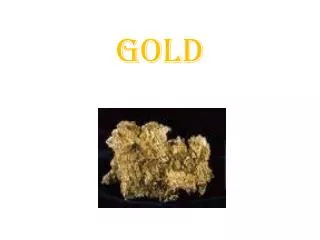
A description for Gold. • Gold is a hard shaped solid. It has different shapes to it.
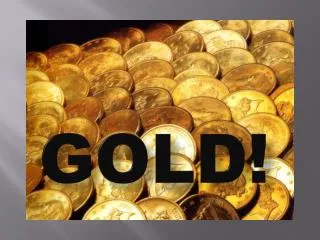
A description for Gold. • Gold is very common in nature cause people wear gold as jewelry.
Most common elements gold are in. • Gold is also in Auric chloride.
Most common elements gold are in. • Gold is also in chlorauric acid.
Sources • I got most this information from www.google.com