Download
1 / 9
90 likes | 210 Vues
This summary highlights discussions from the Variable Capacity Heat Pump Sub-Committee meeting, focusing on best practices for Variable Refrigerant Flow (VRF) systems in schools, VRF incentives, and energy use performance. Key topics included the importance of effective scheduling, integration of VRF systems with central management systems, and load diversity for cost efficiency. The objective is to develop methodologies for estimating and verifying electrical savings while ensuring cost-effective installations that provide persistent energy savings. Future meeting topics were also discussed.

E N D
Variable Capacity Heat Pump RTF Sub-CommitteeFebruary 27, 2013 Mira Vowles, P.E., CEM Emerging Technology Project Manager BPA Energy Efficiency
Meeting Topics • VC HP Overview (Mira) • School VRF System Best Practices (Mira) • ETO VRF Incentives (Kevin) • VRF Fan Energy Use and Part-Load Performance (Richard) • Plus if time allows: • Other VRF research projects (all) • Topic suggestions for future meetings (all)
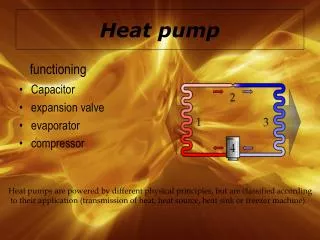
Variable Capacity Heat Pumps (VC HP = VRF + DHP) + Variable Refrigerant FlowHeat Pump System Ductless Heat Pumps
Variable Refrigerant Flow (VRF) Systems • VRF systems, either heat-pump or heat-recovery models, provide heating and air-conditioning, with: • Inverter driven outdoor-unit compressors and condenser fans, providing improved part-load and low-ambient performance, • Multiple indoor-units with multi-speed fans, electronic expansion valves and integrated thermostats, • 3. Refrigerant piping network for heat transfer, • Integrated control system, and • Ventilation provided by VRF system, natural ventilation or a dedicated outside air system (DOAS).
VC HP Sub-Committee • Sub-Committee of the Regional Technical Forum (RTF) • 2. Purpose: develop and recommend VC HP measures with • high consensus methodology to estimate and verify electrical savings • specification for cost effective installations that ensures persistent savings • 3. Minutes and presentations are posted at: http://www.nwcouncil.org/energy/rtf/subcommittees/vchp/Default.htm
School VRF System Best Practices • What is required to schedule VRF systems thru a central EMS or clock system? • How can persistent integration be ensured? • What are the load diversity requirements to make VRF-HR systems cost effective? • How efficient are over-sized systems? • How are savings represented if baseline has no cooling? • How effective are optimal start/stop features?
ETO VRF Incentives • Kevin Campbell, PECI
VRF Fan Energy Use and Part-Load Performance • Richard Raustad • Florida Solar Energy Center