Advanced DIAL Technology for Accurate Emissions Measurement in Industrial Applications
120 likes | 247 Vues
The Differential Absorption Light Detection and Ranging (DIAL) method is a laser-based approach for measuring fugitive emissions over extensive areas, based on Beer’s Law. Developed in the 1980s, it has been effectively employed in Sweden for refinery emissions since 1988. DIAL has shown remarkable accuracy in measuring volatile organic compound (VOC) emissions, often exceeding traditional estimates. Recent tests at refineries in Texas revealed benzene emission rates significantly higher than permitted levels. Future DIAL campaigns will enhance measurement accuracy by incorporating elevated wind data in emissions tests.


Advanced DIAL Technology for Accurate Emissions Measurement in Industrial Applications
E N D
Presentation Transcript
Differential Absorption Light Detection and Ranging Recent Experiences in Emissions Measurement Cary Secrest, US EPA Office of Civil Enforcement Air Enforcement Division
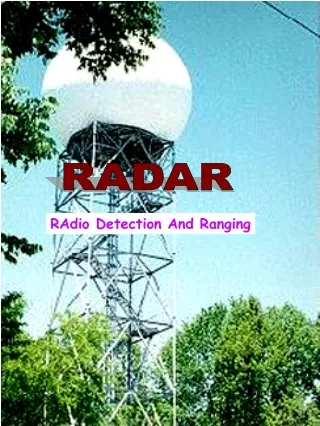
What is DIAL? • Laser-based method for measuring fugitive emission rates over large areas • Measurement principle: Beer’s Law • Measurement Range: 400 m (uv) – 1 km (ir) • Developed in the 1980’s by petroleum companies and researchers • Used in Sweden for refinery emissions since 1988 • Applications: refineries, petrochemicals, Hg chlor-alkali plants and mines, steel mills, methane sources, and others
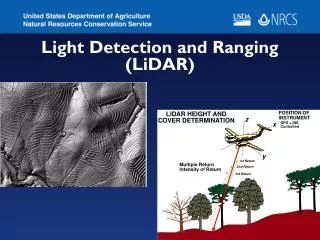
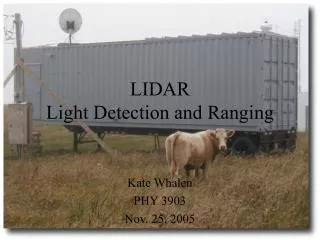
The DIAL Concept Credit: Spectrasyne
Mass Emission Rate • Total mass in scan plane x wind speed = total flux of measured gases • Flux of other gases estimated by compound ratios using sorbent tubes or SUMMA’s • Accuracy 10% to 15% in controlled tracer release and CEMS comparison studies • Greatest potential measurement uncertainty… wind speed in the scan plane • Accuracy may be 35% in complex wind fields • AED may require 20 m met tower in scan plane during future measurements
Texas City Refinery (Summer 2007) Crude oil tank VOC emissions measured with DIAL were more than 5 times the hourly tank emissions estimated using AP-42 emission factors DIAL measured 1.5 to 2.1 lbs/hr of benzene emissions during the cokingprocess Benzene is not a well-understood delayed coker pollutant VOC emissions from a flare were 88 to 326 lbs/hr Flares are assumed to have >98% combustion efficiency! VOC emissions from wastewater treatment area were 30 lbs/hr
Houston Area Refinery (Spring 2010) Examples of benzene emissions include: Refinery Delayed Coker Measured….3.3 to 48.9 lbs/hr Texas Flexible Permit….0.005 lbs/hr Chemical plant pyrolysis gasoline storage tank Measured….1.2 to 32.5 lbs/hr Texas Flexible Permit….1.83 lbs/hr Benzene emissions also appeared to originate from an unpermitted tank Refinery Wastewater Treatment Basins Measured….2.6 to 10.3 lbs/hr Texas Flexible Permit…0.82 lbs/hr The results were consistent with other DIAL campaigns showing that emissions can be much greater than permitted or expected
Next Steps • OAQPS and City of Houston are collaborating to tie DIAL results to process information for emission factors development. • Elevated wind measurement in scan plane will likely be part of future emissions tests.